Some data may have been extracted from scientific literature using a pipeline that uses large language models (LLMs). Source articles are cited where applicable to help verify the extracted relationships.
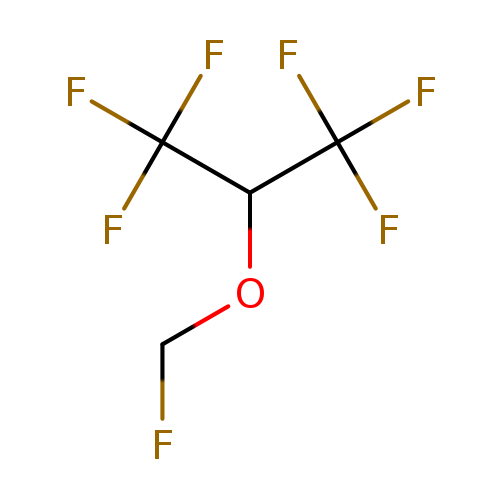
Sevoflurane (C4H3F7O) is an exogenous organic compound with an average molecular weight of 200.05 g/mol. It exists as a liquid at room temperature. Sevoflurane belongs to the ethers, a subclass of organooxygen compounds within the organic compounds. Its roles and uses include application as an inhalation anaesthetic, a platelet aggregation inhibitor, and a central nervous system depressant. It is found in 14 recorded sources, including anesthetics in healthcare, pharmaceuticals and veterinary products; food preservation in food, food processing and cookware; non-electric simulated smoking devices, soap detergents, and tobacco smoke filters in household cleaning and consumer products; and electrical and electronic equipment such as antennas, colour television systems, conductors or conductive bodies characterised by the conductive materials, electric switches, and electrically stimulated smoking devices. Recorded exposure routes include nasal and respiratory pathways, with inhalation supported by literature (PMC11894927 , PMC4310588 ).
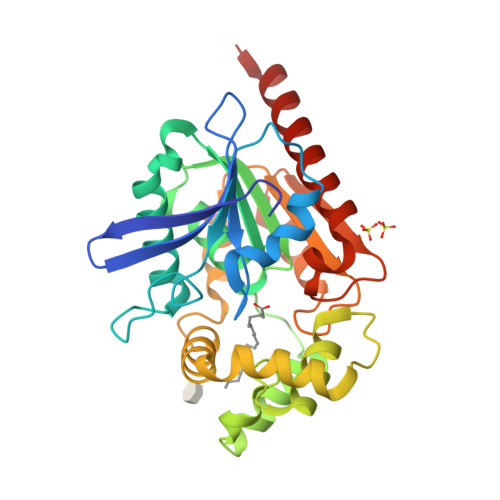
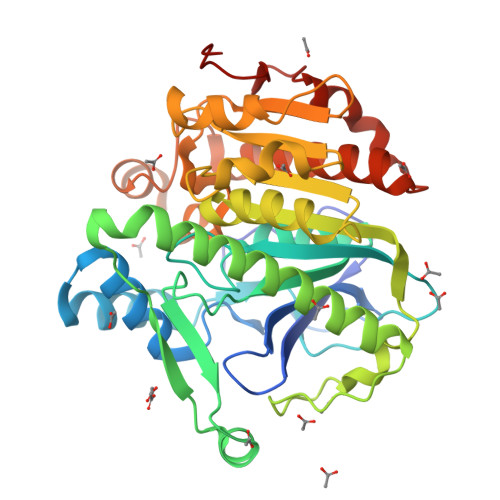
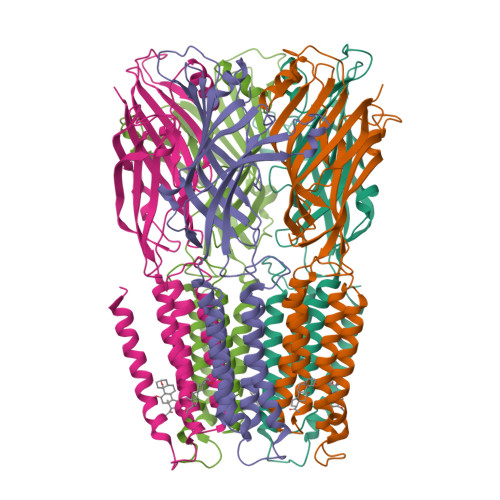
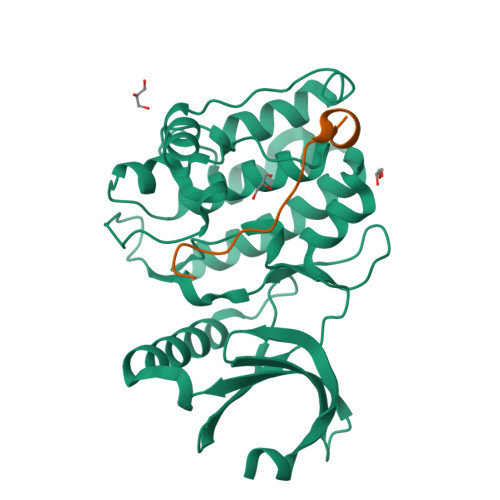
Sevoflurane interacts with 30 recorded protein targets, including Calcium-transporting ATPase type 2C member 1 (ATP2C1), NADH-ubiquinone oxidoreductase chain 1 (MT-ND1), Glycine receptor subunit alpha-1 (GLRA1), and Glutamate receptor 1 (GRIA1). It acts as an activator, agonist, or inhibitor of Gamma-aminobutyric acid receptor subunits pi (GABRP), delta (GABRD), beta-1 (GABRB1), gamma-2 (GABRG2), and 19 other proteins. Sevoflurane induces a reduction in junctional conductance by decreasing gap junction channel opening times and increasing gap junction channel closing times. It activates calcium dependent ATPase in the sarcoplasmic reticulum by increasing the fluidity of the lipid membrane. Additionally, it appears to bind the D subunit of ATP synthase and NADH dehydogenase, and binds to the GABA receptor, the large conductance Ca2+ activated potassium channel, the glutamate receptor, and the glycine receptor.
Belongs to the class of organic compounds known as dialkyl ethers. These are organic compounds containing the dialkyl ether functional group, with the formula ROR', where R and R' are alkyl groups.
Sevoflurane induces a reduction in junctional conductance by decreasing gap junction channel opening times and increasing gap junction channel closing times. Sevoflurane also activates calcium dependent ATPase in the sarcoplasmic reticulum by increasing the fluidity of the lipid membrane. It also appears to bind the D subunit of ATP synthase and NADH dehydogenase and also binds to the GABA receptor, the large conductance Ca2+ activated potassium channel, the glutamate receptor, and the glycine receptor.
No indication of carcinogenicity to humans (not listed by IARC).
Minimum Risk Level
Not Available
Symptoms
Not Available
Treatment
In the event of overdosage, or what may appear to be overdosage, the following action should be taken: discontinue administration of sevoflurane, maintain a patent airway, initiate assisted or controlled ventilation with oxygen, and maintain adequate cardiovascular function. (3)
A disorder characterized by the acute and sudden development of confusion, illusions, movement changes, inattentiveness, agitation, and hallucinations. Usually, it is a reversible condition. (NCI CTCAE)
A state of profound unconsciousness associated with markedly depressed cerebral activity. Causes include central nervous system damage, intoxication, and metabolic abnormalities.
Antennas?Antennas, commonly used in communication technologies, can be a source of synthetic chemical contamination through the materials and coatings used in their construction.
Conductors Or Conductive Bodies Characterised By The Conductive Materials?Conductors, or conductive bodies, are materials that allow the flow of electrical current, typically made from metals such as copper, aluminum, or silver.
Electric Switches?Electric switches, integral components in numerous devices, can be a source of synthetic chemical contamination due to the materials and manufacturing processes involved in their production.
Electrically Stimulated Smoking Devices?Electrically stimulated smoking devices, commonly known as e-cigarettes or vape pens, utilize electrical components to heat a liquid solution, often containing nicotine, flavorings, and other additives, to produce an aerosol for inhalation.
Electrodes?Electrodes, used in various electrical and electronic applications, can be a source of synthetic chemical contamination due to the materials from which they are constructed and the processes involved in their manufacturing.
Television Systems?Television systems can be a source of synthetic chemical contamination due to the various materials and components used in their manufacture and operation.
Food Preservation?Food preservation often involves the use of synthetic chemicals, such as preservatives, flavor enhancers, and color additives, to extend shelf life and enhance the sensory qualities of food products.
Non Electric Simulated Smoking Devices?Non-electric simulated smoking devices, often designed to mimic the experience of smoking without combustion, can be sources of synthetic chemical contamination due to the materials and chemicals used in their construction and operation.
Soap Detergents?Soap detergents are synthetic surfactants designed to enhance the cleaning efficacy of water by reducing surface tension, allowing for better interaction with dirt and grease.
Tobacco Smoke Filters?Tobacco smoke filters are designed to reduce the inhalation of harmful substances in cigarette smoke, including tar and other particulate matter.
Manufacture Preparation Of Tobacco Products?The manufacture and preparation of tobacco products involve various processes that can result in the introduction of synthetic chemicals into the environment.
Molluscicides?Molluscicides are synthetic chemicals specifically designed to control and eliminate mollusks, such as snails and slugs, which can be detrimental to crops and agricultural productivity.
Nematocides?Nematocides are synthetic chemicals specifically designed to control nematodes, which are microscopic roundworms that can cause significant damage to crops and plants.
Aftersun Products?Aftersun products are designed to soothe and hydrate the skin after sun exposure, often containing various synthetic chemicals such as emollients, preservatives, and fragrances.
Anti Perspirants Or Body Deoderants?Antiperspirants and body deodorants commonly contain synthetic chemicals such as aluminum compounds, parabens, and synthetic fragrances.
Essential Oils Or Perfumes?Essential oils and perfumes are complex mixtures of volatile compounds derived from natural or synthetic sources, commonly used for their aromatic properties.
Headwear?Headwear made from synthetic materials often incorporates chemicals used in the manufacturing and finishing processes, such as dyes, flame retardants, and water repellents.
Purses Luggage Hand Bags?Purses, luggage, and handbags are often manufactured using synthetic materials such as polyvinyl chloride (PVC), polyurethane, and various types of nylon.
Purses Money Bags Wallets?Purses, money bags, and wallets are often manufactured using synthetic materials, including plastics, polyurethanes, and various treated fabrics.
Gaseous Fire Fighting?Gaseous fire fighting systems utilize synthetic chemicals, such as halocarbons and inert gases, to suppress fires through chemical and physical processes.
Solid Fire Fighting Substances?Solid fire fighting substances, such as certain types of dry chemical powders, are used in fire suppression applications to extinguish flames and prevent fire spread.
Airplanes And Helicopters?Airplanes and helicopters are significant sources of synthetic chemical contamination primarily through the use of aviation fuels, lubricants, and de-icing agents.
Glass Coatings?Glass coatings are synthetic chemical formulations applied to glass surfaces to enhance properties such as durability, UV resistance, and aesthetic appeal.
Silica Glass?Silica glass, primarily composed of silicon dioxide (SiO2), is widely used in various applications, including windows, glass facades, and insulation materials.
Nanotechnology?Nanotechnology involves the manipulation of materials at the molecular or atomic level, typically within the range of 1 to 100 nanometers.
Mining Or Quarrying?Mining and quarrying operations can lead to synthetic chemical contamination through the release of various pollutants associated with the extraction and processing of minerals.
Sludge Treatment?Sludge treatment involves the processing of waste materials generated from wastewater treatment plants, which often contain a variety of organic and inorganic substances.
Water, Wastewater, & Sewage Treatment?Water, wastewater, and sewage treatment processes are critical for managing and mitigating pollutants in water systems.
ATP synthase F(1) complex subunit delta, mitochondrial
P30049
Humans
Known
Sevoflurane induces a reduction in junctional conductance by decreasing gap junction channel opening times and increasing gap junction channel closing times. Sevoflurane also activates calcium dependent ATPase in the sarcoplasmic reticulum by increasing the fluidity of the lipid membrane. It also appears to bind the D subunit of ATP synthase and NADH dehydogenase and also binds to the GABA receptor, the large conductance Ca2+ activated potassium channel, the glutamate receptor, and the glycine receptor.
Sevoflurane induces a reduction in junctional conductance by decreasing gap junction channel opening times and increasing gap junction channel closing times. Sevoflurane also activates calcium dependent ATPase in the sarcoplasmic reticulum by increasing the fluidity of the lipid membrane. It also appears to bind the D subunit of ATP synthase and NADH dehydogenase and also binds to the GABA receptor, the large conductance Ca2+ activated potassium channel, the glutamate receptor, and the glycine receptor.
Sevoflurane induces a reduction in junctional conductance by decreasing gap junction channel opening times and increasing gap junction channel closing times. Sevoflurane also activates calcium dependent ATPase in the sarcoplasmic reticulum by increasing the fluidity of the lipid membrane. It also appears to bind the D subunit of ATP synthase and NADH dehydogenase and also binds to the GABA receptor, the large conductance Ca2+ activated potassium channel, the glutamate receptor, and the glycine receptor.
Sevoflurane induces a reduction in junctional conductance by decreasing gap junction channel opening times and increasing gap junction channel closing times. Sevoflurane also activates calcium dependent ATPase in the sarcoplasmic reticulum by increasing the fluidity of the lipid membrane. It also appears to bind the D subunit of ATP synthase and NADH dehydogenase and also binds to the GABA receptor, the large conductance Ca2+ activated potassium channel, the glutamate receptor, and the glycine receptor.
Sevoflurane induces a reduction in junctional conductance by decreasing gap junction channel opening times and increasing gap junction channel closing times. Sevoflurane also activates calcium dependent ATPase in the sarcoplasmic reticulum by increasing the fluidity of the lipid membrane. It also appears to bind the D subunit of ATP synthase and NADH dehydogenase and also binds to the GABA receptor, the large conductance Ca2+ activated potassium channel, the glutamate receptor, and the glycine receptor.
Sevoflurane induces a reduction in junctional conductance by decreasing gap junction channel opening times and increasing gap junction channel closing times. Sevoflurane also activates calcium dependent ATPase in the sarcoplasmic reticulum by increasing the fluidity of the lipid membrane. It also appears to bind the D subunit of ATP synthase and NADH dehydogenase and also binds to the GABA receptor, the large conductance Ca2+ activated potassium channel, the glutamate receptor, and the glycine receptor.
Potassium voltage-gated channel subfamily A member 1
Q09470
Humans
Known
Sevoflurane induces a reduction in junctional conductance by decreasing gap junction channel opening times and increasing gap junction channel closing times. Sevoflurane also activates calcium dependent ATPase in the sarcoplasmic reticulum by increasing the fluidity of the lipid membrane. It also appears to bind the D subunit of ATP synthase and NADH dehydogenase and also binds to the GABA receptor, the large conductance Ca2+ activated potassium channel, the glutamate receptor, and the glycine receptor.