Etomidate (CED0003252)

Record Information
Version1.0
Creation Date2016-05-22 03:40:57 UTC
Update Date2026-05-14 16:25:13 UTC
SynCED IDCED0003252
Secondary Accession Numbers
  • CHEM016702
Identification
Common NameEtomidate
ClassSmall Molecule
Description
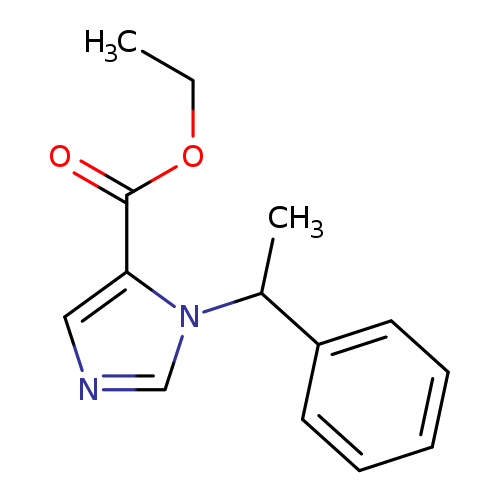
Etomidate is an organic compound with the chemical formula C14H16N2O2 and an average molecular weight of 244.29 g/mol. Etomidate belongs to the imidazoles, a subclass of azoles within the organic compounds. This compound is found in or released from five recorded sources. These include healthcare, pharmaceuticals, and veterinary products where it is used as an anesthetic, as well as household cleaning and consumer products such as bleaching agents, cigar cigarettes, and other smoking requisites. It is also associated with electrical and electronic equipment, specifically electrically stimulated smoking devices. The recorded route of exposure for this compound is intravenous. Etomidate interacts with 17 recorded protein targets. It acts as an agonist, modulator, or positive allosteric modulator of the Alpha-2B adrenergic receptor (ADRA2B), Gamma-aminobutyric acid receptor subunit alpha-1 (GABRA1), Gamma-aminobutyric acid receptor subunit delta (GABRD), and Gamma-aminobutyric acid receptor subunit pi (GABRP), in addition to 13 other proteins.
Contaminant Type
  • Human Neurotoxin
Chemical Structure
Synonyms
ValueSource
1-(1-Phenylethyl)-imidazole-5-carboxylic acid, ethyl esterKegg
AmidateKegg
1-(1-Phenylethyl)-imidazole-5-carboxylate, ethyl esterGenerator
Amidic acidGenerator
Etomidic acidGenerator
EthomidateMeSH
RadenarkonMeSH
HypnomidateMeSH
Ethyl 1-(1-phenylethyl)-1H-imidazole-5-carboxylic acidGenerator
Chemical FormulaC14H16N2O2
Average Molecular Mass244.289 g/mol
Monoisotopic Mass244.121 g/mol
CAS Registry Number33125-97-2
IUPAC Nameethyl 1-(1-phenylethyl)-1H-imidazole-5-carboxylate
Traditional Nameetomidate
SMILESCCOC(=O)C1=CN=CN1C(C)C1=CC=CC=C1
InChI IdentifierInChI=1S/C14H16N2O2/c1-3-18-14(17)13-9-15-10-16(13)11(2)12-7-5-4-6-8-12/h4-11H,3H2,1-2H3
InChI KeyNPUKDXXFDDZOKR-UHFFFAOYSA-N
Chemical Taxonomy
Description Belongs to the class of organic compounds known as carbonylimidazoles. These are substituted imidazoles in which the imidazole ring bears a carbonyl group.
KingdomOrganic compounds
Super ClassOrganoheterocyclic compounds
ClassAzoles
Sub ClassImidazoles
Direct ParentCarbonylimidazoles
Alternative Parents
Substituents
  • Imidazole-4-carbonyl group
  • Monocyclic benzene moiety
  • Benzenoid
  • N-substituted imidazole
  • Heteroaromatic compound
  • Carboxylic acid ester
  • Carboxylic acid derivative
  • Monocarboxylic acid or derivatives
  • Azacycle
  • Organic nitrogen compound
  • Organonitrogen compound
  • Organooxygen compound
  • Hydrocarbon derivative
  • Organic oxide
  • Organopnictogen compound
  • Organic oxygen compound
  • Aromatic heteromonocyclic compound
Molecular FrameworkAromatic heteromonocyclic compounds
External DescriptorsNot Available
Biological Properties
StatusDetected and Not Quantified
OriginNot Available
Cellular LocationsNot Available
Biofluid LocationsNot Available
Tissue LocationsNot Available
ApplicationsNot Available
Biological RolesNot Available
Chemical RolesNot Available
Organoleptic EffectsNot Available
Physical Properties
StateNot Available
AppearanceNot Available
Experimental Properties
PropertyValue
Melting PointNot Available
Boiling PointNot Available
SolubilityNot Available
Predicted Properties
PropertyValueSource
Water Solubility0.48 g/LALOGPS
logP2.66ALOGPS
logP2.5ChemAxon
logS-2.7ALOGPS
pKa (Strongest Basic)4.54ChemAxon
Physiological Charge0ChemAxon
Hydrogen Acceptor Count2ChemAxon
Hydrogen Donor Count0ChemAxon
Polar Surface Area44.12 ŲChemAxon
Rotatable Bond Count5ChemAxon
Refractivity69.59 m³·mol⁻¹ChemAxon
Polarizability26.2 ųChemAxon
Number of Rings2ChemAxon
BioavailabilityYesChemAxon
Rule of FiveYesChemAxon
Ghose FilterYesChemAxon
Veber's RuleNoChemAxon
MDDR-like RuleNoChemAxon
Spectra
Spectra
Spectrum TypeDescriptionSplash KeyDeposition DateView
Predicted LC-MS/MSPredicted LC-MS/MS Spectrumsplash10-0002-0290000000-733900e68c9232363353Not AvailableView Spectrum
Predicted LC-MS/MSPredicted LC-MS/MS Spectrumsplash10-0002-3930000000-fbc274f64b0d02f755a7Not AvailableView Spectrum
Predicted LC-MS/MSPredicted LC-MS/MS Spectrumsplash10-0a4i-7900000000-485ad993bffaea25b5d3Not AvailableView Spectrum
Predicted LC-MS/MSPredicted LC-MS/MS Spectrumsplash10-0007-2790000000-4b638d62f5e9c65a7195Not AvailableView Spectrum
Predicted LC-MS/MSPredicted LC-MS/MS Spectrumsplash10-006w-3920000000-0b29e1fde3fc264c376aNot AvailableView Spectrum
Predicted LC-MS/MSPredicted LC-MS/MS Spectrumsplash10-014l-9100000000-75baf1004934a35dbe84Not AvailableView Spectrum
Toxicity Profile
Toxicity Values
Toxicity ValueOrganismDose DescriptorRoute of ExposurePredicted or ExperimentalToxicity RatingReference
1424.0 Log mg/kg [800:2500]RatLD50oralpredictedNot AvailableNot Available
Toxicity / Toxin ClassNot Available
Mechanism of ToxicityNot Available
Carcinogenicity (IARC Classification)Not Available
Minimum Risk LevelNot Available
SymptomsNot Available
TreatmentNot Available
Health Effects
Health EffectRelationshipDirectionDescriptionReference
Exposure Sources
Source IDSourceSectorReference
CEDs000010Insecticides?Insecticides are synthetic chemicals designed to control or eliminate insect pests that threaten crops and other agricultural products.Agriculture & land managementPubChem
CEDs000233Brushes?Brushes used in personal care and cosmetics can be a source of synthetic chemical contamination due to the materials and coatings used in their manufacturing.Personal care & cosmeticsPubChem
CEDs000369Anesthetics?Anesthetics are synthetic chemicals used to induce loss of sensation or consciousness in patients undergoing medical procedures.Healthcare, pharmaceuticals & veterinary productsNot Available
CEDs000511Conductors Or Conductive Bodies Characterised By The Conductive Materials?Conductors, or conductive bodies, are materials that allow the flow of electrical current, typically made from metals such as copper, aluminum, or silver.Electrical & Electronic EquipmentPubChem
CEDs000518Electrically Stimulated Smoking Devices?Electrically stimulated smoking devices, commonly known as e-cigarettes or vape pens, utilize electrical components to heat a liquid solution, often containing nicotine, flavorings, and other additives, to produce an aerosol for inhalation.Electrical & Electronic EquipmentPubChem
CEDs000519Electrodes?Electrodes, used in various electrical and electronic applications, can be a source of synthetic chemical contamination due to the materials from which they are constructed and the processes involved in their manufacturing.Electrical & Electronic EquipmentPubChem
CEDs000524Hybrid Capacitors?Hybrid capacitors are energy storage devices that combine the properties of electrolytic and supercapacitors, utilizing a combination of electrochemical principles to achieve higher energy density and power density.Electrical & Electronic EquipmentPubChem
CEDs000545Food Preservation?Food preservation often involves the use of synthetic chemicals, such as preservatives, flavor enhancers, and color additives, to extend shelf life and enhance the sensory qualities of food products.Food, food processing & cookwarePubChem
CEDs000555Bleaching Agents?Bleaching agents are chemical substances used to whiten or lighten materials, often employed in various cleaning products for their stain removal and disinfecting properties.Household cleaning & consumer productsPubChem
CEDs000556Cigar Cigarettes?Cigar cigarettes are a source of synthetic chemical contamination due to the combustion of various tobacco blends and additives.Household cleaning & consumer productsPubChem
CEDs000560Other Smoking Requisites?Other smoking requisites, including items such as lighters, matches, and rolling papers, can introduce synthetic chemical contamination through various components and additives.Household cleaning & consumer productsPubChem
CEDs000561Perfumes Within Detergents And Soaps?Perfumes within detergents and soaps are synthetic fragrance compounds added to enhance the sensory experience of cleaning products.Household cleaning & consumer productsPubChem
CEDs000563Soap Detergents?Soap detergents are synthetic surfactants designed to enhance the cleaning efficacy of water by reducing surface tension, allowing for better interaction with dirt and grease.Household cleaning & consumer productsPubChem
CEDs000569Tobacco Smoke Filters?Tobacco smoke filters are designed to reduce the inhalation of harmful substances in cigarette smoke, including tar and other particulate matter.Household cleaning & consumer productsPubChem
CEDs000580Manufacture Preparation Of Tobacco Products?The manufacture and preparation of tobacco products involve various processes that can result in the introduction of synthetic chemicals into the environment.Industrial manufacturing & chemical processingPubChem
CEDs000581Paper Making Machines?Paper making machines utilize various synthetic chemicals throughout the production process, including additives, coatings, and bleaching agents.Industrial manufacturing & chemical processingPubChem
CEDs000596Acaricides?Acaricides are synthetic chemicals specifically designed to target and control mite populations that can damage crops and plants.Agriculture & land managementPubChem
CEDs000605Pest Repellants?Pest repellents, often formulated from synthetic chemicals, are widely used to protect crops from insect infestations and other pests.Agriculture & land managementPubChem
CEDs000606Plant Growth Regulators?Plant Growth Regulators (PGRs) are synthetic chemicals designed to influence the growth and development of plants.Agriculture & land managementPubChem
CEDs000610Aftersun Products?Aftersun products are designed to soothe and hydrate the skin after sun exposure, often containing various synthetic chemicals such as emollients, preservatives, and fragrances.Personal care & cosmeticsPubChem
CEDs000611Anti Perspirants Or Body Deoderants?Antiperspirants and body deodorants commonly contain synthetic chemicals such as aluminum compounds, parabens, and synthetic fragrances.Personal care & cosmeticsPubChem
CEDs000614Essential Oils Or Perfumes?Essential oils and perfumes are complex mixtures of volatile compounds derived from natural or synthetic sources, commonly used for their aromatic properties.Personal care & cosmeticsPubChem
CEDs000615Eye Makeup Products?Eye makeup products, including mascaras, eyeliners, and eyeshadows, often contain a variety of synthetic chemicals such as pigments, preservatives, and film-forming agents.Personal care & cosmeticsPubChem
CEDs000617Lip Care Products?Lip care products, including lipsticks, balms, and glosses, often contain a variety of synthetic chemicals such as parabens, phthalates, and synthetic fragrances.Personal care & cosmeticsPubChem
CEDs000618Lip Makeup Products?Lip makeup products, such as lipsticks, lip glosses, and lip liners, often contain a variety of synthetic chemicals, including pigments, preservatives, and emollients.Personal care & cosmeticsPubChem
CEDs000630Toys?Toys, particularly those made from synthetic materials such as plastics, can be a source of chemical contamination due to the presence of various additives and compounds used in their production.Recreation & sports surfacesPubChem
CEDs000632Apparel?Apparel production often involves the use of various synthetic chemicals, including dyes, finishing agents, and preservatives.Textiles, leather & furnishingsPubChem
CEDs000633Azo Dyes?Azo dyes are synthetic organic compounds characterized by the presence of one or more azo groups (-N=N-), which are widely used for coloring textiles, leather, and furnishings.Textiles, leather & furnishingsPubChem
CEDs000642Footwear?Footwear production often involves the use of various synthetic chemicals, such as adhesives, dyes, and treatments, which can contribute to environmental contamination.Textiles, leather & furnishingsPubChem
CEDs000648Nitro Dyes?Nitro dyes are synthetic colorants that contain nitro groups (-NO2) in their chemical structure.Textiles, leather & furnishingsPubChem
CEDs000671Airplanes And Helicopters?Airplanes and helicopters are significant sources of synthetic chemical contamination primarily through the use of aviation fuels, lubricants, and de-icing agents.Aviation & AerospacePubChem
CEDs000678Nitrogenous Fertilisers?Nitrogenous fertilizers are synthetic chemical compounds primarily used to enhance plant growth by supplying essential nitrogen, a crucial nutrient for photosynthesis and protein synthesis.Agriculture & land managementPubChem
CEDs000679Phosphatic Fertilisers?Phosphatic fertilizers are synthetic chemical products primarily composed of phosphorus, which is essential for plant growth.Agriculture & land managementPubChem
CEDs000685Ceramics?Ceramics can be a source of synthetic chemical contamination through various additives and processing agents used in their production.Building & ConstructionPubChem
CEDs000688Glass Coatings?Glass coatings are synthetic chemical formulations applied to glass surfaces to enhance properties such as durability, UV resistance, and aesthetic appeal.Building & ConstructionPubChem
CEDs000696Nanotechnology?Nanotechnology involves the manipulation of materials at the molecular or atomic level, typically within the range of 1 to 100 nanometers.Industrial manufacturing & chemical processingPubChem
CEDs000735Explosives?Explosives are chemical compounds or mixtures designed to undergo rapid decomposition, releasing energy in the form of gas and heat.Defense & military infrastructurePubChem
CEDs000738Cooling Circuit Water?Cooling circuit water is utilized in various industrial processes to absorb and dissipate heat generated during operations.Industrial manufacturing & chemical processingPubChem
CEDs000739Inks?Inks are complex mixtures composed of pigments or dyes, solvents, resins, and additives used primarily for printing and writing applications.Paper, pulp & fiber productsPubChem
CEDs000740Paper?Paper production involves the processing of wood fibers and the use of various chemicals, which can lead to synthetic chemical contamination.Paper, pulp & fiber productsPubChem
CEDs000741Pigment Pastes?Pigment pastes are concentrated dispersions of pigments used to impart color and properties to materials.Paper, pulp & fiber productsPubChem
CEDs000742Leather Tanning?Leather tanning is a process that transforms raw animal hides into durable leather through the application of various chemicals, including chromium salts, aldehydes, and vegetable tannins.Textiles, leather & furnishingsPubChem
CEDs000743Sludge Treatment?Sludge treatment involves the processing of waste materials generated from wastewater treatment plants, which often contain a variety of organic and inorganic substances.Wastewater, sanitation & biosolidsPubChem
CEDs000744Water, Wastewater, & Sewage Treatment?Water, wastewater, and sewage treatment processes are critical for managing and mitigating pollutants in water systems.Wastewater, sanitation & biosolidsPubChem
Pathways
3 pathwaysPathway Source: PathBank
Targets
StructureProteinUniProt IDOrganismRelationshipDetails
Muscarinic acetylcholine receptor M1 structureClick to view 3D structureMuscarinic acetylcholine receptor M1P11229HumansPredicted (SEA)
Prediction Confidence Score
0.319
Applicability Domain
0.373
Statistical Significance
0.0185
Supporting Reference Compounds
385
E-value
144.41
Muscarinic acetylcholine receptor M3 structureClick to view 3D structureMuscarinic acetylcholine receptor M3P20309HumansPredicted (SEA)
Prediction Confidence Score
0.319
Applicability Domain
0.373
Statistical Significance
0.0125
Supporting Reference Compounds
310
E-value
97.3115
Muscarinic acetylcholine receptor M4 structureClick to view 3D structureMuscarinic acetylcholine receptor M4P08173HumansPredicted (SEA)
Prediction Confidence Score
0.318
Applicability Domain
0.373
Statistical Significance
0.0127
Supporting Reference Compounds
297
E-value
98.8685
Protein RecA structureClick to view 3D structureProtein RecAP9WHJ3Mycobacterium tuberculosisPredicted (SEA)
Prediction Confidence Score
0.317
Applicability Domain
0.339
Statistical Significance
0.0058
Supporting Reference Compounds
296
E-value
45.3082
Click to view 3D structureStreptokinase AP10520Streptococcus pyogenes serotype M1Predicted (SEA)
Prediction Confidence Score
0.313
Applicability Domain
0.322
Statistical Significance
0.0142
Supporting Reference Compounds
425
E-value
110.624
Pyruvate carboxylase structureClick to view 3D structurePyruvate carboxylaseA0A0H3JRU9Staphylococcus aureus (strain Mu50 / ATCC 700699)Predicted (SEA)
Prediction Confidence Score
0.304
Applicability Domain
0.304
Statistical Significance
3.40e-04
Supporting Reference Compounds
1
E-value
2.64687
Click to view 3D structureDNA damage-inducible transcript 3 proteinP35639Mus musculusPredicted (SEA)
Prediction Confidence Score
0.304
Applicability Domain
0.339
Statistical Significance
0.0067
Supporting Reference Compounds
226
E-value
52.159
X-box-binding protein 1 structureClick to view 3D structureX-box-binding protein 1P17861HumansPredicted (SEA)
Prediction Confidence Score
0.304
Applicability Domain
0.339
Statistical Significance
0.0067
Supporting Reference Compounds
227
E-value
52.159
Muscarinic acetylcholine receptor M5 structureClick to view 3D structureMuscarinic acetylcholine receptor M5P08912HumansPredicted (SEA)
Prediction Confidence Score
0.301
Applicability Domain
0.333
Statistical Significance
0.018
Supporting Reference Compounds
266
E-value
140.051
Muscarinic acetylcholine receptor M2 structureClick to view 3D structureMuscarinic acetylcholine receptor M2P08172HumansPredicted (SEA)
Prediction Confidence Score
0.301
Applicability Domain
0.333
Statistical Significance
0.0269
Supporting Reference Compounds
373
E-value
209.337
Cytochrome P450 2D6 structureClick to view 3D structureCytochrome P450 2D6P10635HumansPredicted (SEA)
Prediction Confidence Score
0.293
Applicability Domain
0.333
Statistical Significance
0.1314
Supporting Reference Compounds
1130
E-value
1022.63
Cytochrome P450 3A4 structureClick to view 3D structureCytochrome P450 3A4P08684HumansPredicted (SEA)
Prediction Confidence Score
0.293
Applicability Domain
0.319
Statistical Significance
0.2016
Supporting Reference Compounds
1538
E-value
1569.83
Voltage-gated inwardly rectifying potassium channel KCNH2 structureClick to view 3D structureVoltage-gated inwardly rectifying potassium channel KCNH2Q12809HumansPredicted (SEA)
Prediction Confidence Score
0.292
Applicability Domain
0.321
Statistical Significance
0.1967
Supporting Reference Compounds
1498
E-value
1530.98
Click to view 3D structureAdenosine receptor A1P25099Rattus norvegicusPredicted (SEA)
Prediction Confidence Score
0.291
Applicability Domain
0.333
Statistical Significance
0.0196
Supporting Reference Compounds
221
E-value
152.273
Cytochrome P450 2C9 structureClick to view 3D structureCytochrome P450 2C9P11712HumansPredicted (SEA)
Prediction Confidence Score
0.289
Applicability Domain
0.31
Statistical Significance
0.1818
Supporting Reference Compounds
1245
E-value
1415.14
Adenosine receptor A3 structureClick to view 3D structureAdenosine receptor A3P0DMS8HumansPredicted (SEA)
Prediction Confidence Score
0.288
Applicability Domain
0.328
Statistical Significance
0.0363
Supporting Reference Compounds
391
E-value
282.593
Click to view 3D structureSodium-dependent serotonin transporterP31652Rattus norvegicusPredicted (SEA)
Prediction Confidence Score
0.287
Applicability Domain
0.309
Statistical Significance
0.04
Supporting Reference Compounds
297
E-value
311.319
Click to view 3D structureGamma-aminobutyric acid receptor subunit alpha-6Q16445HumansPredicted (SEA)
Prediction Confidence Score
0.286
Applicability Domain
0.357
Statistical Significance
3.90e-04
Supporting Reference Compounds
4
E-value
3.03612
cGMP-specific 3',5'-cyclic phosphodiesterase structureClick to view 3D structurecGMP-specific 3',5'-cyclic phosphodiesteraseO76074HumansPredicted (SEA)
Prediction Confidence Score
0.284
Applicability Domain
0.357
Statistical Significance
0.0137
Supporting Reference Compounds
183
E-value
106.965
Cytochrome P450 2C19 structureClick to view 3D structureCytochrome P450 2C19P33261HumansPredicted (SEA)
Prediction Confidence Score
0.283
Applicability Domain
0.31
Statistical Significance
0.1187
Supporting Reference Compounds
825
E-value
923.992
Adenosine receptor A1 structureClick to view 3D structureAdenosine receptor A1P30542HumansPredicted (SEA)
Prediction Confidence Score
0.282
Applicability Domain
0.348
Statistical Significance
0.0299
Supporting Reference Compounds
302
E-value
232.691
Click to view 3D structureAdenosine receptor A1P28190Bos taurusPredicted (SEA)
Prediction Confidence Score
0.281
Applicability Domain
0.348
Statistical Significance
0.0094
Supporting Reference Compounds
72
E-value
73.0226
Acetylcholinesterase structureClick to view 3D structureAcetylcholinesteraseP22303HumansPredicted (SEA)
Prediction Confidence Score
0.281
Applicability Domain
0.293 Low confidence
Statistical Significance
0.0681
Supporting Reference Compounds
406
E-value
530.387
Click to view 3D structureCholinesteraseP81908Equus caballusPredicted (SEA)
Prediction Confidence Score
0.281
Applicability Domain
0.293 Low confidence
Statistical Significance
0.0402
Supporting Reference Compounds
201
E-value
313.343
Click to view 3D structureMuscarinic acetylcholine receptor M2P10980Rattus norvegicusPredicted (SEA)
Prediction Confidence Score
0.281
Applicability Domain
0.288 Low confidence
Statistical Significance
0.0075
Supporting Reference Compounds
98
E-value
58.1534
Concentrations
Not Available
External Links
DrugBank IDNot Available
HMDB IDNot Available
FooDB IDNot Available
Phenol Explorer IDNot Available
KNApSAcK IDNot Available
BiGG IDNot Available
BioCyc IDNot Available
METLIN IDNot Available
PDB IDNot Available
Wikipedia LinkEtomidate
Chemspider IDNot Available
ChEBI IDNot Available
PubChem Compound ID36339
Kegg Compound IDC07522
YMDB IDNot Available
ECMDB IDNot Available
References
Synthesis ReferenceNot Available
MSDSNot Available
General ReferencesNot Available