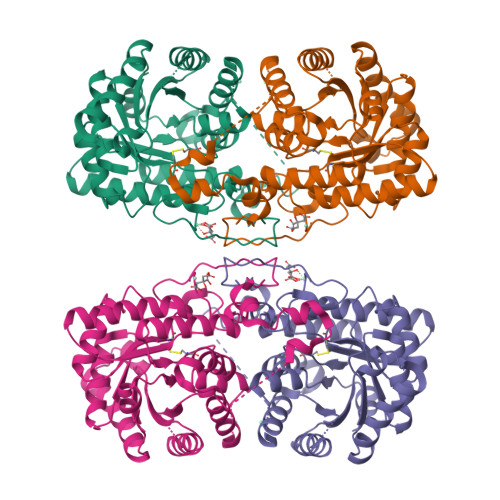
Arginine hydrochloride (CED0000508)

Record Information
Version1.0
Creation Date2016-05-26 00:05:14 UTC
Update Date2026-04-05 20:28:31 UTC
SynCED IDCED0000508
Secondary Accession Numbers
  • CHEM027920
Identification
Common NameArginine hydrochloride
ClassSmall Molecule
Description
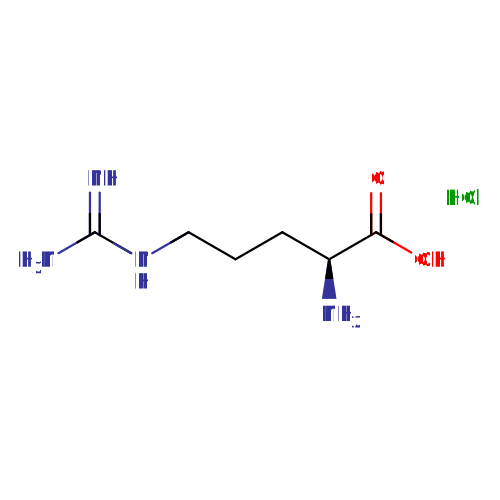
Arginine hydrochloride is an organic compound with the formula C6H15ClN4O2 and an average molecular weight of 210.66 g/mol. Arginine hydrochloride belongs to the amino acids, peptides, and analogues, a subclass of carboxylic acids and derivatives within the organic compounds. Industrially, the compound is utilized as a conditioner and softener.
Contaminant TypeNot Available
Chemical Structure
Synonyms
ValueSource
R-GeneKegg
ArginineMeSH
Arginine hydrochlorideMeSH
Arginine, L isomerMeSH
Arginine, L-isomerMeSH
DL Arginine acetate, monohydrateMeSH
DL-Arginine acetate, monohydrateMeSH
Hydrochloride, arginineMeSH
L ArginineMeSH
L-ArginineMeSH
L-Isomer arginineMeSH
Monohydrate DL-arginine acetateMeSH
R-Gene 10KEGG
L-Arginine hydrochlorideKEGG
Chemical FormulaC6H15ClN4O2
Average Molecular Mass210.662 g/mol
Monoisotopic Mass210.088 g/mol
CAS Registry Number1119-34-2
IUPAC NameNot Available
Traditional NameNot Available
SMILESCl.N[C@@H](CCCNC(N)=N)C(O)=O
InChI IdentifierInChI=1S/C6H14N4O2.ClH/c7-4(5(11)12)2-1-3-10-6(8)9;/h4H,1-3,7H2,(H,11,12)(H4,8,9,10);1H/t4-;/m0./s1
InChI KeyKWTQSFXGGICVPE-WCCKRBBISA-N
Chemical Taxonomy
Description Belongs to the class of organic compounds known as l-alpha-amino acids. These are alpha amino acids which have the L-configuration of the alpha-carbon atom.
KingdomOrganic compounds
Super ClassOrganic acids and derivatives
ClassCarboxylic acids and derivatives
Sub ClassAmino acids, peptides, and analogues
Direct ParentL-alpha-amino acids
Alternative Parents
Substituents
  • L-alpha-amino acid
  • Fatty acid
  • Guanidine
  • Amino acid
  • Carboxylic acid
  • Monocarboxylic acid or derivatives
  • Carboximidamide
  • Propargyl-type 1,3-dipolar organic compound
  • Organic 1,3-dipolar compound
  • Amine
  • Hydrochloride
  • Hydrocarbon derivative
  • Organic oxide
  • Primary amine
  • Organooxygen compound
  • Organonitrogen compound
  • Organopnictogen compound
  • Primary aliphatic amine
  • Organic oxygen compound
  • Organic nitrogen compound
  • Carbonyl group
  • Aliphatic acyclic compound
Molecular FrameworkAliphatic acyclic compounds
External DescriptorsNot Available
Biological Properties
StatusDetected and Not Quantified
OriginNot Available
Cellular LocationsNot Available
Biofluid LocationsNot Available
Tissue LocationsNot Available
ApplicationsNot Available
Biological RolesNot Available
Chemical RolesNot Available
Organoleptic EffectsNot Available
Physical Properties
StateNot Available
AppearanceNot Available
Experimental Properties
PropertyValue
Melting PointNot Available
Boiling PointNot Available
SolubilityNot Available
Predicted PropertiesNot Available
Spectra
Spectra
Spectrum TypeDescriptionSplash KeyDeposition DateView
Predicted LC-MS/MSPredicted LC-MS/MS Spectrumsplash10-03di-0090000000-ba136292022554d19559Not AvailableView Spectrum
Predicted LC-MS/MSPredicted LC-MS/MS Spectrumsplash10-0a4i-0090000000-eeb49a5efca667bd0317Not AvailableView Spectrum
Toxicity Profile
Toxicity Values
Toxicity ValueOrganismDose DescriptorRoute of ExposurePredicted or ExperimentalToxicity RatingReference
6651.0 Log mg/kg [3700:12000]RatLD50oralpredictedNot AvailableNot Available
Toxicity / Toxin ClassNot Available
Mechanism of ToxicityNot Available
Carcinogenicity (IARC Classification)Not Available
Minimum Risk LevelNot Available
SymptomsNot Available
TreatmentNot Available
Health Effects
Health EffectRelationshipDirectionDescriptionReference
Exposure Sources
Source IDSourceSectorReference
CEDs000010Insecticides?Insecticides are synthetic chemicals designed to control or eliminate insect pests that threaten crops and other agricultural products.Agriculture & land managementPubChem
CEDs000070Stormwater runoff?Stormwater runoff refers to the flow of rainwater or melted snow that does not soak into the ground and instead collects pollutants as it travels over impervious surfaces such as roads and parking lots.Automotive & urban infrastructurePubChem
CEDs000511Conductors Or Conductive Bodies Characterised By The Conductive Materials?Conductors, or conductive bodies, are materials that allow the flow of electrical current, typically made from metals such as copper, aluminum, or silver.Electrical & Electronic EquipmentPubChem
CEDs000518Electrically Stimulated Smoking Devices?Electrically stimulated smoking devices, commonly known as e-cigarettes or vape pens, utilize electrical components to heat a liquid solution, often containing nicotine, flavorings, and other additives, to produce an aerosol for inhalation.Electrical & Electronic EquipmentPubChem
CEDs000519Electrodes?Electrodes, used in various electrical and electronic applications, can be a source of synthetic chemical contamination due to the materials from which they are constructed and the processes involved in their manufacturing.Electrical & Electronic EquipmentPubChem
CEDs000545Food Preservation?Food preservation often involves the use of synthetic chemicals, such as preservatives, flavor enhancers, and color additives, to extend shelf life and enhance the sensory qualities of food products.Food, food processing & cookwarePubChem
CEDs000561Perfumes Within Detergents And Soaps?Perfumes within detergents and soaps are synthetic fragrance compounds added to enhance the sensory experience of cleaning products.Household cleaning & consumer productsPubChem
CEDs000563Soap Detergents?Soap detergents are synthetic surfactants designed to enhance the cleaning efficacy of water by reducing surface tension, allowing for better interaction with dirt and grease.Household cleaning & consumer productsPubChem
CEDs000569Tobacco Smoke Filters?Tobacco smoke filters are designed to reduce the inhalation of harmful substances in cigarette smoke, including tar and other particulate matter.Household cleaning & consumer productsPubChem
CEDs000580Manufacture Preparation Of Tobacco Products?The manufacture and preparation of tobacco products involve various processes that can result in the introduction of synthetic chemicals into the environment.Industrial manufacturing & chemical processingPubChem
CEDs000603Nematocides?Nematocides are synthetic chemicals specifically designed to control nematodes, which are microscopic roundworms that can cause significant damage to crops and plants.Agriculture & land managementPubChem
CEDs000605Pest Repellants?Pest repellents, often formulated from synthetic chemicals, are widely used to protect crops from insect infestations and other pests.Agriculture & land managementPubChem
CEDs000606Plant Growth Regulators?Plant Growth Regulators (PGRs) are synthetic chemicals designed to influence the growth and development of plants.Agriculture & land managementPubChem
CEDs000609Aftershave?Aftershave is a grooming product typically used to soothe and protect the skin following shaving.Personal care & cosmeticsPubChem
CEDs000610Aftersun Products?Aftersun products are designed to soothe and hydrate the skin after sun exposure, often containing various synthetic chemicals such as emollients, preservatives, and fragrances.Personal care & cosmeticsPubChem
CEDs000611Anti Perspirants Or Body Deoderants?Antiperspirants and body deodorants commonly contain synthetic chemicals such as aluminum compounds, parabens, and synthetic fragrances.Personal care & cosmeticsPubChem
CEDs000614Essential Oils Or Perfumes?Essential oils and perfumes are complex mixtures of volatile compounds derived from natural or synthetic sources, commonly used for their aromatic properties.Personal care & cosmeticsPubChem
CEDs000615Eye Makeup Products?Eye makeup products, including mascaras, eyeliners, and eyeshadows, often contain a variety of synthetic chemicals such as pigments, preservatives, and film-forming agents.Personal care & cosmeticsPubChem
CEDs000617Lip Care Products?Lip care products, including lipsticks, balms, and glosses, often contain a variety of synthetic chemicals such as parabens, phthalates, and synthetic fragrances.Personal care & cosmeticsPubChem
CEDs000618Lip Makeup Products?Lip makeup products, such as lipsticks, lip glosses, and lip liners, often contain a variety of synthetic chemicals, including pigments, preservatives, and emollients.Personal care & cosmeticsPubChem
CEDs000632Apparel?Apparel production often involves the use of various synthetic chemicals, including dyes, finishing agents, and preservatives.Textiles, leather & furnishingsPubChem
CEDs000678Nitrogenous Fertilisers?Nitrogenous fertilizers are synthetic chemical compounds primarily used to enhance plant growth by supplying essential nitrogen, a crucial nutrient for photosynthesis and protein synthesis.Agriculture & land managementPubChem
CEDs000679Phosphatic Fertilisers?Phosphatic fertilizers are synthetic chemical products primarily composed of phosphorus, which is essential for plant growth.Agriculture & land managementPubChem
CEDs000688Glass Coatings?Glass coatings are synthetic chemical formulations applied to glass surfaces to enhance properties such as durability, UV resistance, and aesthetic appeal.Building & ConstructionPubChem
CEDs000693Silica Glass?Silica glass, primarily composed of silicon dioxide (SiO2), is widely used in various applications, including windows, glass facades, and insulation materials.Building & ConstructionPubChem
CEDs000696Nanotechnology?Nanotechnology involves the manipulation of materials at the molecular or atomic level, typically within the range of 1 to 100 nanometers.Industrial manufacturing & chemical processingPubChem
CEDs000735Explosives?Explosives are chemical compounds or mixtures designed to undergo rapid decomposition, releasing energy in the form of gas and heat.Defense & military infrastructurePubChem
CEDs000739Inks?Inks are complex mixtures composed of pigments or dyes, solvents, resins, and additives used primarily for printing and writing applications.Paper, pulp & fiber productsPubChem
CEDs000740Paper?Paper production involves the processing of wood fibers and the use of various chemicals, which can lead to synthetic chemical contamination.Paper, pulp & fiber productsPubChem
CEDs000742Leather Tanning?Leather tanning is a process that transforms raw animal hides into durable leather through the application of various chemicals, including chromium salts, aldehydes, and vegetable tannins.Textiles, leather & furnishingsPubChem
CEDs000744Water, Wastewater, & Sewage Treatment?Water, wastewater, and sewage treatment processes are critical for managing and mitigating pollutants in water systems.Wastewater, sanitation & biosolidsPubChem
Pathways
0 pathwaysPathway Source: PathBank

No pathways found

No metabolic pathways have been associated with this synthetic chemical

Targets
StructureProteinUniProt IDOrganismRelationshipDetails
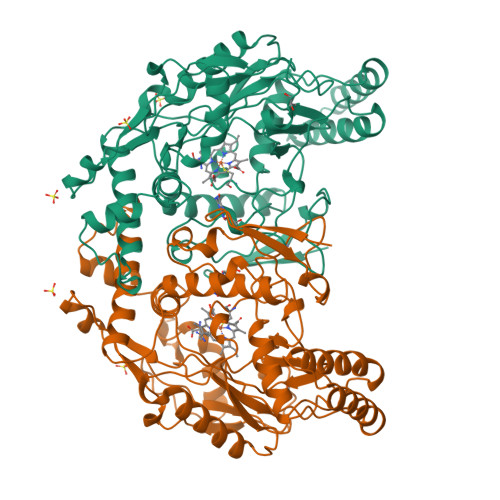
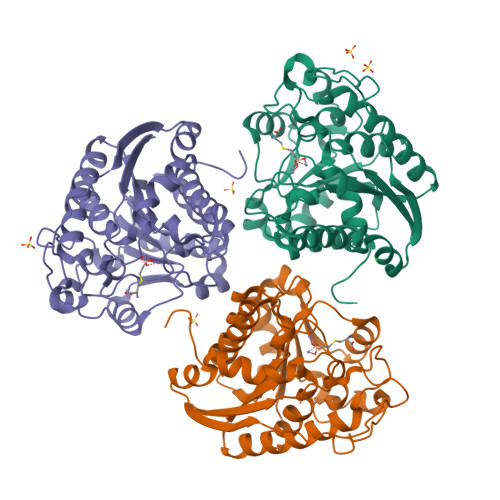
Nitric oxide synthase, inducible structureClick to view 3D structureNitric oxide synthase, inducibleP35228HumansPredicted (SEA)
Prediction Confidence Score
0.64
Applicability Domain
0.963
Statistical Significance
1.00e-05
Supporting Reference Compounds
47
E-value
0.0778492
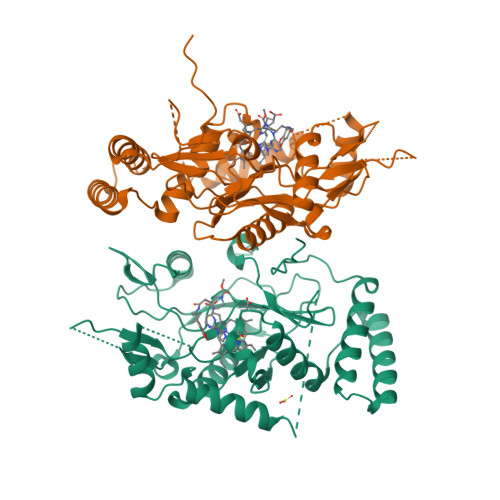
Ornithine transcarbamylase, mitochondrial structureClick to view 3D structureOrnithine transcarbamylase, mitochondrialP00480HumansPredicted (SEA)
Prediction Confidence Score
0.541
Applicability Domain
0.541
Statistical Significance
1.00e-05
Supporting Reference Compounds
1
E-value
0.0778492
Nitric oxide synthase, inducible structureClick to view 3D structureNitric oxide synthase, inducibleP29477Mus musculusPredicted (SEA)
Prediction Confidence Score
0.482
Applicability Domain
0.688
Statistical Significance
2.50e-04
Supporting Reference Compounds
47
E-value
1.94623
Nitric oxide synthase 1 structureClick to view 3D structureNitric oxide synthase 1P29475HumansPredicted (SEA)
Prediction Confidence Score
0.469
Applicability Domain
0.688
Statistical Significance
4.90e-04
Supporting Reference Compounds
65
E-value
3.81461
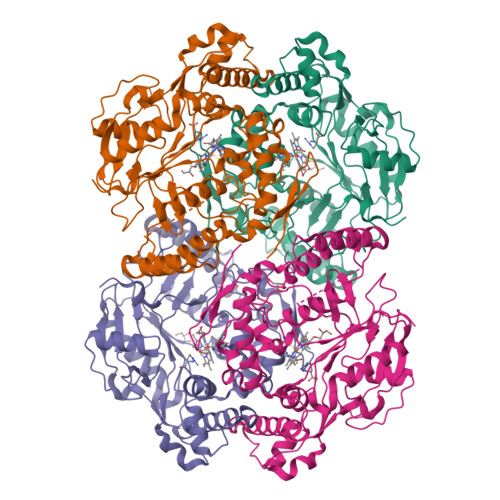
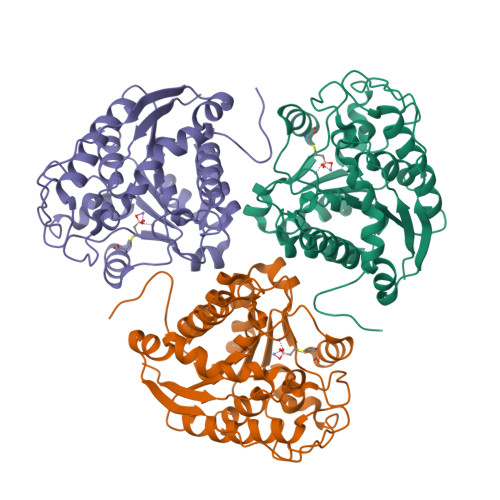
Arginase-2, mitochondrial structureClick to view 3D structureArginase-2, mitochondrialP78540HumansPredicted (SEA)
Prediction Confidence Score
0.467
Applicability Domain
0.667
Statistical Significance
4.00e-05
Supporting Reference Compounds
7
E-value
0.311397
Nitric oxide synthase 1 structureClick to view 3D structureNitric oxide synthase 1P29476Rattus norvegicusPredicted (SEA)
Prediction Confidence Score
0.455
Applicability Domain
0.688
Statistical Significance
4.50e-04
Supporting Reference Compounds
49
E-value
3.50322
Arginase structureClick to view 3D structureArginaseQ8I384Plasmodium falciparumPredicted (SEA)
Prediction Confidence Score
0.429
Applicability Domain
0.429
Statistical Significance
6.00e-05
Supporting Reference Compounds
1
E-value
0.467095
Click to view 3D structureDeoxyhypusine synthaseQ9GSW0Plasmodium falciparumPredicted (SEA)
Prediction Confidence Score
0.424
Applicability Domain
0.424
Statistical Significance
1.00e-05
Supporting Reference Compounds
1
E-value
0.0778492
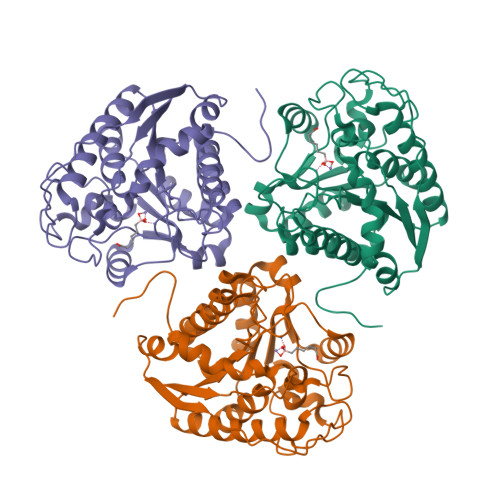
Arginase-1 structureClick to view 3D structureArginase-1P05089HumansPredicted (SEA)
Prediction Confidence Score
0.408
Applicability Domain
0.667
Statistical Significance
4.00e-05
Supporting Reference Compounds
8
E-value
0.311397
Click to view 3D structureMetabotropic glutamate receptor 8P47743Mus musculusPredicted (SEA)
Prediction Confidence Score
0.389
Applicability Domain
0.406
Statistical Significance
1.10e-04
Supporting Reference Compounds
2
E-value
0.856341
Arginase-1 structureClick to view 3D structureArginase-1P07824Rattus norvegicusPredicted (SEA)
Prediction Confidence Score
0.382
Applicability Domain
0.667
Statistical Significance
3.00e-05
Supporting Reference Compounds
6
E-value
0.233548
Click to view 3D structureNeuropeptide FF receptor 2Q9Y5X5HumansPredicted (SEA)
Prediction Confidence Score
0.372
Applicability Domain
0.392
Statistical Significance
0.0131
Supporting Reference Compounds
25
E-value
102.138
Click to view 3D structureNeuropeptide FF receptor 1Q9GZQ6HumansPredicted (SEA)
Prediction Confidence Score
0.372
Applicability Domain
0.392
Statistical Significance
0.0118
Supporting Reference Compounds
21
E-value
91.6285
Click to view 3D structureMetabotropic glutamate receptor 6P35349Rattus norvegicusPredicted (SEA)
Prediction Confidence Score
0.366
Applicability Domain
0.406
Statistical Significance
2.30e-04
Supporting Reference Compounds
24
E-value
1.79053
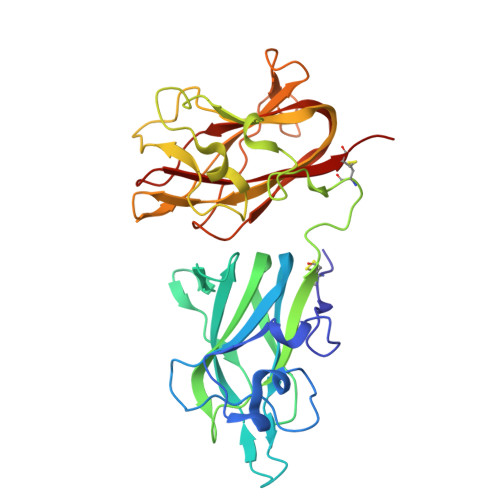
Neuropilin-1 structureClick to view 3D structureNeuropilin-1Q9QWJ9Rattus norvegicusPredicted (SEA)
Prediction Confidence Score
0.364
Applicability Domain
0.381
Statistical Significance
0.0018
Supporting Reference Compounds
2
E-value
13.7015
Glutamine synthetase structureClick to view 3D structureGlutamine synthetaseP0A9C5Escherichia coli K-12Predicted (SEA)
Prediction Confidence Score
0.359
Applicability Domain
0.359
Statistical Significance
1.50e-04
Supporting Reference Compounds
1
E-value
1.16774
Click to view 3D structureMetabotropic glutamate receptor 2P31421Rattus norvegicusPredicted (SEA)
Prediction Confidence Score
0.356
Applicability Domain
0.406
Statistical Significance
7.50e-04
Supporting Reference Compounds
53
E-value
5.83869
Click to view 3D structureAsc-type amino acid transporter 1P63116RatPredicted (SEA)
Prediction Confidence Score
0.355
Applicability Domain
0.355
Statistical Significance
1.50e-04
Supporting Reference Compounds
2
E-value
1.16774
Betaine--homocysteine S-methyltransferase 1 structureClick to view 3D structureBetaine--homocysteine S-methyltransferase 1Q93088HumansPredicted (SEA)
Prediction Confidence Score
0.35
Applicability Domain
0.35
Statistical Significance
1.40e-04
Supporting Reference Compounds
1
E-value
1.08989
Click to view 3D structureMetabotropic glutamate receptor 4P31423Rattus norvegicusPredicted (SEA)
Prediction Confidence Score
0.35
Applicability Domain
0.406
Statistical Significance
8.60e-04
Supporting Reference Compounds
38
E-value
6.69503
Cytochrome P450 3A4 structureClick to view 3D structureCytochrome P450 3A4P08684HumansPredicted (SEA)
Prediction Confidence Score
0.343
Applicability Domain
0.963
Statistical Significance
0.0621
Supporting Reference Compounds
1538
E-value
483.132
Glutamate receptor ionotropic, kainate 1 structureClick to view 3D structureGlutamate receptor ionotropic, kainate 1P22756Rattus norvegicusPredicted (SEA)
Prediction Confidence Score
0.342
Applicability Domain
0.406
Statistical Significance
4.00e-04
Supporting Reference Compounds
45
E-value
3.11397
Click to view 3D structureMetabotropic glutamate receptor 6O15303HumansPredicted (SEA)
Prediction Confidence Score
0.341
Applicability Domain
0.406
Statistical Significance
4.30e-04
Supporting Reference Compounds
39
E-value
3.34752
Click to view 3D structureDeoxyhypusine synthaseQ6AY53Rattus norvegicusPredicted (SEA)
Prediction Confidence Score
0.34
Applicability Domain
0.438
Statistical Significance
2.00e-05
Supporting Reference Compounds
3
E-value
0.155698
Click to view 3D structureMetabotropic glutamate receptor 8P70579Rattus norvegicusPredicted (SEA)
Prediction Confidence Score
0.338
Applicability Domain
0.406
Statistical Significance
4.20e-04
Supporting Reference Compounds
28
E-value
3.26967
Concentrations
Not Available
External Links
DrugBank IDDBSALT000869
HMDB IDHMDB0303361
FooDB IDFDB011914
Phenol Explorer IDNot Available
KNApSAcK IDNot Available
BiGG IDNot Available
BioCyc IDNot Available
METLIN IDNot Available
PDB IDNot Available
Wikipedia LinkNot Available
Chemspider ID59634
ChEBI IDNot Available
PubChem Compound ID66250
Kegg Compound IDNot Available
YMDB IDNot Available
ECMDB IDNot Available
References
Synthesis ReferenceNot Available
MSDSNot Available
General ReferencesNot Available