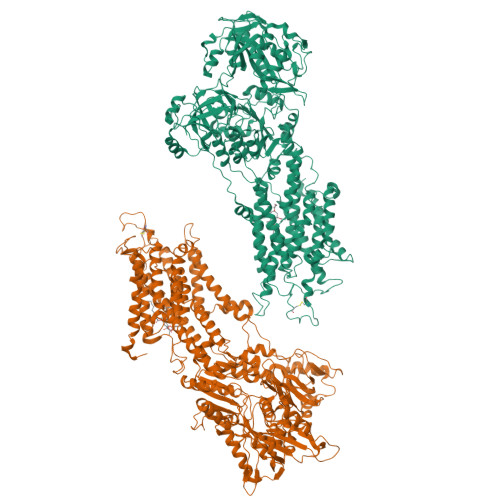
Phosphonic acid, [[3,5-bis(1,1-dimethylethyl)-4-hydroxyphenyl]methyl]-, diethyl ester (CED0134080)

Record Information
Version1.0
Creation Date2026-04-03 01:20:46 UTC
Update Date2026-08-20 04:19:44 UTC
SynCED IDCED0134080
Secondary Accession Numbers
  • CHEM059513
Identification
Common NamePhosphonic acid, [[3,5-bis(1,1-dimethylethyl)-4-hydroxyphenyl]methyl]-, diethyl ester
ClassSmall Molecule
Description
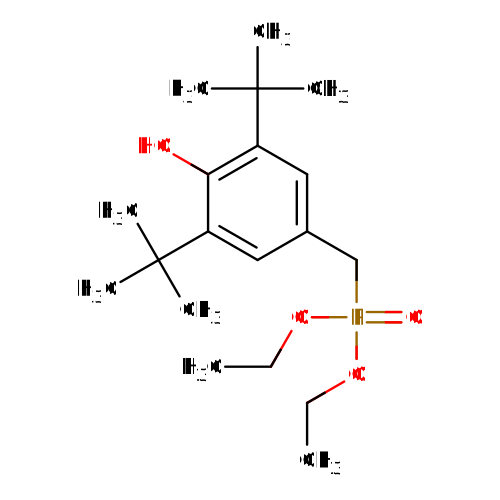
Phosphonic acid, [[3,5-bis(1,1-dimethylethyl)-4-hydroxyphenyl]methyl]-, diethyl ester belongs to the phenylpropanes, a subclass of benzene and substituted derivatives within the organic compounds. This benzenoid compound has the chemical formula $\text{C}_{19}\text{H}_{33}\text{O}_4\text{P}_1$ and an average molecular weight of 356.44 g/mol. In industrial applications, the compound is utilized as an antioxidant. It has been identified in nine recorded sources. These include various types of electrical and electronic equipment, such as antennas, coils, communication cables or conductors, discharge lamps, and electric switches, among two others. Additionally, the substance is found in household items, specifically credit card holders, and is associated with food, food processing and cookware, where it is used in the processing of meats.
Contaminant TypeNot Available
Chemical Structure
Synonyms
ValueSource
Phosphonate, [[3,5-bis(1,1-dimethylethyl)-4-hydroxyphenyl]methyl]-, diethyl esterGenerator
Chemical FormulaC19H33O4P1
Average Molecular Mass356.443 g/mol
Monoisotopic Mass356.212 g/mol
CAS Registry Number976-56-7
IUPAC NameNot Available
Traditional NameNot Available
SMILESCCOP(=O)(CC1=CC(=C(O)C(=C1)C(C)(C)C)C(C)(C)C)OCC
InChI IdentifierInChI=1S/C19H33O4P/c1-9-22-24(21,23-10-2)13-14-11-15(18(3,4)5)17(20)16(12-14)19(6,7)8/h11-12,20H,9-10,13H2,1-8H3
InChI KeyGJDRKHHGPHLVNI-UHFFFAOYSA-N
Chemical Taxonomy
Description Belongs to the class of organic compounds known as phenylpropanes. These are organic compounds containing a phenylpropane moiety.
KingdomOrganic compounds
Super ClassBenzenoids
ClassBenzene and substituted derivatives
Sub ClassPhenylpropanes
Direct ParentPhenylpropanes
Alternative Parents
Substituents
  • Phenylpropane
  • Dialkyl alkylphosphonate
  • Phosphonic acid diester
  • Phenol
  • Phosphonic acid ester
  • Organophosphonic acid derivative
  • Organic oxygen compound
  • Organopnictogen compound
  • Organic oxide
  • Hydrocarbon derivative
  • Organophosphorus compound
  • Organooxygen compound
  • Aromatic homomonocyclic compound
Molecular FrameworkAromatic homomonocyclic compounds
External DescriptorsNot Available
Biological Properties
StatusDetected and Not Quantified
OriginNot Available
Cellular LocationsNot Available
Biofluid LocationsNot Available
Tissue LocationsNot Available
ApplicationsNot Available
Biological Roles
Chemical RolesNot Available
Organoleptic EffectsNot Available
Physical Properties
StateNot Available
AppearanceNot Available
Experimental Properties
PropertyValue
Melting PointNot Available
Boiling PointNot Available
SolubilityNot Available
Predicted PropertiesNot Available
Spectra
SpectraNot Available
Toxicity Profile
Toxicity Values
Toxicity ValueOrganismDose DescriptorRoute of ExposurePredicted or ExperimentalToxicity RatingReference
1807.0 Log mg/kg [1000:3200]RatLD50oralpredictedNot AvailableNot Available
Toxicity / Toxin ClassNot Available
Mechanism of ToxicityNot Available
Carcinogenicity (IARC Classification)Not Available
Minimum Risk LevelNot Available
SymptomsNot Available
TreatmentNot Available
Health Effects
Health EffectRelationshipDirectionDescriptionReference
Exposure Sources
Source IDSourceSectorReference
CEDs000506Antennas?Antennas, commonly used in communication technologies, can be a source of synthetic chemical contamination through the materials and coatings used in their construction.Electrical & Electronic EquipmentPubChem
CEDs000508Coils?Coils are components used in various electrical and electronic applications, such as transformers, inductors, and motors.Electrical & Electronic EquipmentPubChem
CEDs000510Communication Cables Or Conductors?Communication cables or conductors are essential components in the transmission of data and signals in various applications, including telecommunications and networking.Electrical & Electronic EquipmentPubChem
CEDs000511Conductors Or Conductive Bodies Characterised By The Conductive Materials?Conductors, or conductive bodies, are materials that allow the flow of electrical current, typically made from metals such as copper, aluminum, or silver.Electrical & Electronic EquipmentPubChem
CEDs000514Discharge Lamps?Discharge lamps, including fluorescent and high-intensity discharge (HID) lamps, are commonly used for lighting applications due to their energy efficiency and brightness.Electrical & Electronic EquipmentPubChem
CEDs000517Electric Switches?Electric switches, integral components in numerous devices, can be a source of synthetic chemical contamination due to the materials and manufacturing processes involved in their production.Electrical & Electronic EquipmentPubChem
CEDs000519Electrodes?Electrodes, used in various electrical and electronic applications, can be a source of synthetic chemical contamination due to the materials from which they are constructed and the processes involved in their manufacturing.Electrical & Electronic EquipmentPubChem
CEDs000520Emergency Protective Devices?Emergency protective devices, such as circuit breakers and surge protectors, are essential components in electrical systems designed to prevent damage from overcurrent and surges.Electrical & Electronic EquipmentPubChem
CEDs000521Fixed Capacitors And Their Manufacture?Fixed capacitors are passive electronic components used to store and release electrical energy, playing a critical role in various circuits.Electrical & Electronic EquipmentPubChem
CEDs000529Power Cables?Power cables are used to transmit electrical energy and are typically composed of conductive materials, insulation, and protective coatings.Electrical & Electronic EquipmentPubChem
CEDs000545Food Preservation?Food preservation often involves the use of synthetic chemicals, such as preservatives, flavor enhancers, and color additives, to extend shelf life and enhance the sensory qualities of food products.Food, food processing & cookwarePubChem
CEDs000552Processing Meats?Processing meats can lead to synthetic chemical contamination primarily through the use of additives and preservatives.Food, food processing & cookwarePubChem
CEDs000561Perfumes Within Detergents And Soaps?Perfumes within detergents and soaps are synthetic fragrance compounds added to enhance the sensory experience of cleaning products.Household cleaning & consumer productsPubChem
CEDs000569Tobacco Smoke Filters?Tobacco smoke filters are designed to reduce the inhalation of harmful substances in cigarette smoke, including tar and other particulate matter.Household cleaning & consumer productsPubChem
CEDs000572Credit Card Holders?Credit card holders are often manufactured using synthetic polymers such as polyvinyl chloride (PVC) and polyurethane, which may contain additives like plasticizers, stabilizers, and flame retardants.Household itemsPubChem
CEDs000596Acaricides?Acaricides are synthetic chemicals specifically designed to target and control mite populations that can damage crops and plants.Agriculture & land managementPubChem
CEDs000611Anti Perspirants Or Body Deoderants?Antiperspirants and body deodorants commonly contain synthetic chemicals such as aluminum compounds, parabens, and synthetic fragrances.Personal care & cosmeticsPubChem
CEDs000613Depilatories?Depilatories are products designed to remove unwanted hair through the application of synthetic chemicals that break down the protein structure of hair, facilitating its removal.Personal care & cosmeticsPubChem
CEDs000614Essential Oils Or Perfumes?Essential oils and perfumes are complex mixtures of volatile compounds derived from natural or synthetic sources, commonly used for their aromatic properties.Personal care & cosmeticsPubChem
CEDs000615Eye Makeup Products?Eye makeup products, including mascaras, eyeliners, and eyeshadows, often contain a variety of synthetic chemicals such as pigments, preservatives, and film-forming agents.Personal care & cosmeticsPubChem
CEDs000618Lip Makeup Products?Lip makeup products, such as lipsticks, lip glosses, and lip liners, often contain a variety of synthetic chemicals, including pigments, preservatives, and emollients.Personal care & cosmeticsPubChem
CEDs000624Merry Go Rounds?Merry-go-rounds, commonly found in playgrounds and recreational areas, can be a source of synthetic chemical contamination primarily due to the materials used in their construction.Recreation & sports surfacesPubChem
CEDs000626Rocking Horses?Rocking horses, often made from various synthetic materials such as plastics, foams, and treated woods, can be a source of synthetic chemical contamination due to the presence of additives and coatings used in their production.Recreation & sports surfacesPubChem
CEDs000630Toys?Toys, particularly those made from synthetic materials such as plastics, can be a source of chemical contamination due to the presence of various additives and compounds used in their production.Recreation & sports surfacesPubChem
CEDs000632Apparel?Apparel production often involves the use of various synthetic chemicals, including dyes, finishing agents, and preservatives.Textiles, leather & furnishingsPubChem
CEDs000642Footwear?Footwear production often involves the use of various synthetic chemicals, such as adhesives, dyes, and treatments, which can contribute to environmental contamination.Textiles, leather & furnishingsPubChem
CEDs000643Headwear?Headwear made from synthetic materials often incorporates chemicals used in the manufacturing and finishing processes, such as dyes, flame retardants, and water repellents.Textiles, leather & furnishingsPubChem
CEDs000650Purses Luggage Hand Bags?Purses, luggage, and handbags are often manufactured using synthetic materials such as polyvinyl chloride (PVC), polyurethane, and various types of nylon.Textiles, leather & furnishingsPubChem
CEDs000662Yarns Or Threads?Yarns or threads used in textiles can be a source of synthetic chemical contamination due to the production processes and treatments they undergo.Textiles, leather & furnishingsPubChem
CEDs000685Ceramics?Ceramics can be a source of synthetic chemical contamination through various additives and processing agents used in their production.Building & ConstructionPubChem
CEDs000688Glass Coatings?Glass coatings are synthetic chemical formulations applied to glass surfaces to enhance properties such as durability, UV resistance, and aesthetic appeal.Building & ConstructionPubChem
CEDs000696Nanotechnology?Nanotechnology involves the manipulation of materials at the molecular or atomic level, typically within the range of 1 to 100 nanometers.Industrial manufacturing & chemical processingPubChem
CEDs000734Coating Compositions?Coating compositions, which include paints, sealants, and varnishes, are formulated with a variety of synthetic chemicals such as solvents, resins, pigments, and additives.Building & ConstructionPubChem
CEDs000735Explosives?Explosives are chemical compounds or mixtures designed to undergo rapid decomposition, releasing energy in the form of gas and heat.Defense & military infrastructurePubChem
CEDs000739Inks?Inks are complex mixtures composed of pigments or dyes, solvents, resins, and additives used primarily for printing and writing applications.Paper, pulp & fiber productsPubChem
CEDs000740Paper?Paper production involves the processing of wood fibers and the use of various chemicals, which can lead to synthetic chemical contamination.Paper, pulp & fiber productsPubChem
CEDs000741Pigment Pastes?Pigment pastes are concentrated dispersions of pigments used to impart color and properties to materials.Paper, pulp & fiber productsPubChem
CEDs000744Water, Wastewater, & Sewage Treatment?Water, wastewater, and sewage treatment processes are critical for managing and mitigating pollutants in water systems.Wastewater, sanitation & biosolidsPubChem
Pathways
0 pathwaysPathway Source: PathBank

No pathways found

No metabolic pathways have been associated with this synthetic chemical

Targets
StructureProteinUniProt IDOrganismRelationshipDetails
Click to view 3D structurePolyunsaturated fatty acid 5-lipoxygenaseP12527Rattus norvegicusPredicted (SEA)
Prediction Confidence Score
0.316
Applicability Domain
0.341
Statistical Significance
0.0044
Supporting Reference Compounds
78
E-value
34.6429
Prostaglandin G/H synthase 1 structureClick to view 3D structureProstaglandin G/H synthase 1P23219HumansPredicted (SEA)
Prediction Confidence Score
0.314
Applicability Domain
0.341
Statistical Significance
0.0071
Supporting Reference Compounds
136
E-value
55.5843
Prostaglandin G/H synthase 2 structureClick to view 3D structureProstaglandin G/H synthase 2Q05769Mus musculusPredicted (SEA)
Prediction Confidence Score
0.314
Applicability Domain
0.327
Statistical Significance
0.0019
Supporting Reference Compounds
43
E-value
14.7135
Prostaglandin G/H synthase 2 structureClick to view 3D structureProstaglandin G/H synthase 2P35354HumansPredicted (SEA)
Prediction Confidence Score
0.279
Applicability Domain
0.327
Statistical Significance
0.0304
Supporting Reference Compounds
201
E-value
236.973
Nuclear receptor subfamily 1 group I member 2 structureClick to view 3D structureNuclear receptor subfamily 1 group I member 2O75469HumansPredicted (SEA)
Prediction Confidence Score
0.257
Applicability Domain
0.548
Statistical Significance
0.0202
Supporting Reference Compounds
146
E-value
157.411
Carbonic anhydrase 2 structureClick to view 3D structureCarbonic anhydrase 2P00918HumansPredicted (SEA)
Prediction Confidence Score
0.255
Applicability Domain
0.4
Statistical Significance
0.1476
Supporting Reference Compounds
472
E-value
1149.05
Diacylglycerol acyltransferase/mycolyltransferase Ag85C structureClick to view 3D structureDiacylglycerol acyltransferase/mycolyltransferase Ag85CP9WQN9Mycobacterium tuberculosis (strain ATCC 25618 / H37Rv)Predicted (SEA)
Prediction Confidence Score
0.255
Applicability Domain
0.255 Low confidence
Statistical Significance
8.20e-04
Supporting Reference Compounds
1
E-value
6.38364
Prostaglandin G/H synthase 1 structureClick to view 3D structureProstaglandin G/H synthase 1P05979Ovis ariesPredicted (SEA)
Prediction Confidence Score
0.244
Applicability Domain
0.294 Low confidence
Statistical Significance
0.0539
Supporting Reference Compounds
106
E-value
419.997
Click to view 3D structure1-deoxy-D-xylulose-5-phosphate synthaseB7UJP3Escherichia coli O127:H6 (strain E2348/69 / EPEC)Predicted (SEA)
Prediction Confidence Score
0.241
Applicability Domain
0.282 Low confidence
Statistical Significance
3.50e-04
Supporting Reference Compounds
2
E-value
2.72472
Short transient receptor potential channel 4 structureClick to view 3D structureShort transient receptor potential channel 4Q9QUQ5Mus musculusPredicted (SEA)
Prediction Confidence Score
0.231
Applicability Domain
0.314
Statistical Significance
0.1475
Supporting Reference Compounds
128
E-value
1148.43
Tyrosine-protein phosphatase non-receptor type 11 structureClick to view 3D structureTyrosine-protein phosphatase non-receptor type 11Q06124HumansPredicted (SEA)
Prediction Confidence Score
0.229
Applicability Domain
0.265 Low confidence
Statistical Significance
0.0863
Supporting Reference Compounds
109
E-value
672.15
Tyrosine-protein phosphatase non-receptor type 1 structureClick to view 3D structureTyrosine-protein phosphatase non-receptor type 1P18031HumansPredicted (SEA)
Prediction Confidence Score
0.229
Applicability Domain
0.265 Low confidence
Statistical Significance
0.1178
Supporting Reference Compounds
197
E-value
917.142
Amine oxidase [flavin-containing] B structureClick to view 3D structureAmine oxidase [flavin-containing] BP27338HumansPredicted (SEA)
Prediction Confidence Score
0.229
Applicability Domain
0.375
Statistical Significance
0.2534
Supporting Reference Compounds
315
E-value
1973.01
CDGSH iron-sulfur domain-containing protein 1 structureClick to view 3D structureCDGSH iron-sulfur domain-containing protein 1Q9NZ45HumansPredicted (SEA)
Prediction Confidence Score
0.227
Applicability Domain
0.375
Statistical Significance
0.0047
Supporting Reference Compounds
22
E-value
36.7448
Acetylcholinesterase structureClick to view 3D structureAcetylcholinesteraseP07140Drosophila melanogasterPredicted (SEA)
Prediction Confidence Score
0.224
Applicability Domain
0.238 Low confidence
Statistical Significance
3.00e-04
Supporting Reference Compounds
2
E-value
2.33548
Tyrosinase structureClick to view 3D structureTyrosinaseP14679HumansPredicted (SEA)
Prediction Confidence Score
0.219
Applicability Domain
0.4
Statistical Significance
0.0133
Supporting Reference Compounds
29
E-value
103.539
Pyridoxine-5'-phosphate oxidase structureClick to view 3D structurePyridoxine-5'-phosphate oxidaseQ9NVS9HumansPredicted (SEA)
Prediction Confidence Score
0.218
Applicability Domain
0.218 Low confidence
Statistical Significance
1.80e-04
Supporting Reference Compounds
1
E-value
1.40129
Click to view 3D structureCannabinoid receptor 1P47746Mus musculusPredicted (SEA)
Prediction Confidence Score
0.216
Applicability Domain
0.265 Low confidence
Statistical Significance
0.0367
Supporting Reference Compounds
42
E-value
285.707
Click to view 3D structureFatty-acid amide hydrolase 1O08914Mus musculusPredicted (SEA)
Prediction Confidence Score
0.213
Applicability Domain
0.265 Low confidence
Statistical Significance
0.1101
Supporting Reference Compounds
46
E-value
857.276
GIM-1 protein structureClick to view 3D structureGIM-1 proteinQ704V1Pseudomonas aeruginosaPredicted (SEA)
Prediction Confidence Score
0.212
Applicability Domain
0.269 Low confidence
Statistical Significance
0.0129
Supporting Reference Compounds
2
E-value
100.737
Click to view 3D structureDNA damage-inducible transcript 3 proteinP35639Mus musculusPredicted (SEA)
Prediction Confidence Score
0.211
Applicability Domain
0.255 Low confidence
Statistical Significance
0.3495
Supporting Reference Compounds
226
E-value
2720.91
X-box-binding protein 1 structureClick to view 3D structureX-box-binding protein 1P17861HumansPredicted (SEA)
Prediction Confidence Score
0.211
Applicability Domain
0.255 Low confidence
Statistical Significance
0.3502
Supporting Reference Compounds
227
E-value
2726.28
Sarcoplasmic/endoplasmic reticulum calcium ATPase 1 structureClick to view 3D structureSarcoplasmic/endoplasmic reticulum calcium ATPase 1P04191Oryctolagus cuniculusPredicted (SEA)
Prediction Confidence Score
0.211
Applicability Domain
0.314
Statistical Significance
0.0021
Supporting Reference Compounds
15
E-value
16.3483
Click to view 3D structureMonoglyceride lipaseO35678Mus musculusPredicted (SEA)
Prediction Confidence Score
0.211
Applicability Domain
0.265 Low confidence
Statistical Significance
0.0577
Supporting Reference Compounds
34
E-value
449.19
Proto-oncogene tyrosine-protein kinase Src structureClick to view 3D structureProto-oncogene tyrosine-protein kinase SrcP12931HumansPredicted (SEA)
Prediction Confidence Score
0.211
Applicability Domain
0.341
Statistical Significance
0.7793
Supporting Reference Compounds
1158
E-value
6066.63
Concentrations
Not Available
External Links
DrugBank IDNot Available
HMDB IDNot Available
FooDB IDNot Available
Phenol Explorer IDNot Available
KNApSAcK IDNot Available
BiGG IDNot Available
BioCyc IDNot Available
METLIN IDNot Available
PDB IDNot Available
Wikipedia LinkNot Available
Chemspider IDNot Available
ChEBI IDNot Available
PubChem Compound ID70421
Kegg Compound IDNot Available
YMDB IDNot Available
ECMDB IDNot Available
References
Synthesis ReferenceNot Available
MSDSNot Available
General ReferencesNot Available