4,4'-Thiobis[2-tert-butyl-6-methylphenol] (CED0022340)

Record Information
Version1.0
Creation Date2026-04-04 18:01:41 UTC
Update Date2026-08-21 22:57:20 UTC
SynCED IDCED0022340
Secondary Accession Numbers
  • CHEM077259
Identification
Common Name4,4'-Thiobis[2-tert-butyl-6-methylphenol]
ClassSmall Molecule
Description
4,4'-Thiobis[2-tert-butyl-6-methylphenol] is an organic compound with the chemical formula C22H30O2S1 and an average molecular weight of 358.54 g/mol. 4,4'-Thiobis[2-tert-butyl-6-methylphenol] belongs to the aryl thioethers, a subclass of thioethers within the organic compounds. This substance is found in or released from 15 recorded sources. Within the category of electrical and electronic equipment, it is associated with communication cables or conductors, electrodes, fixed capacitors and their manufacture, electric switches, and conductors or conductive bodies characterised by the conductive materials, among four other sources. In the realm of food, food processing, and cookware, it is linked to food contact materials, food preservation, brew kettles, and the preparation of wort. Additionally, it is found in household cleaning and consumer products, specifically in tobacco smoke filters and cigar cigarettes. Recorded exposure routes for this compound include inhalation, oral, and touch.
Contaminant Type
  • Phenolic Antioxidant
Chemical Structure
SynonymsNot Available
Chemical FormulaC22H30O2S1
Average Molecular Mass358.540 g/mol
Monoisotopic Mass358.197 g/mol
CAS Registry Number96-66-2
IUPAC NameNot Available
Traditional NameNot Available
SMILESCC1=CC(SC2=CC(=C(O)C(C)=C2)C(C)(C)C)=CC(=C1O)C(C)(C)C
InChI IdentifierInChI=1S/C22H30O2S/c1-13-9-15(11-17(19(13)23)21(3,4)5)25-16-10-14(2)20(24)18(12-16)22(6,7)8/h9-12,23-24H,1-8H3
InChI KeyYFHKLSPMRRWLKI-UHFFFAOYSA-N
Chemical Taxonomy
ClassificationNot classified
Biological Properties
StatusDetected and Not Quantified
OriginNot Available
Cellular LocationsNot Available
Biofluid LocationsNot Available
Tissue LocationsNot Available
ApplicationsNot Available
Biological RolesNot Available
Chemical RolesNot Available
Organoleptic EffectsNot Available
Physical Properties
StateNot Available
AppearanceNot Available
Experimental Properties
PropertyValue
Melting PointNot Available
Boiling PointNot Available
SolubilityNot Available
Predicted PropertiesNot Available
Spectra
SpectraNot Available
Toxicity Profile
Toxicity Values
Toxicity ValueOrganismDose DescriptorRoute of ExposurePredicted or ExperimentalToxicity RatingReference
5098.0 Log mg/kg [2900:9100]RatLD50oralpredictedNot AvailableNot Available
Toxicity / Toxin ClassNot Available
Mechanism of ToxicityNot Available
Carcinogenicity (IARC Classification)Not Available
Minimum Risk LevelNot Available
SymptomsNot Available
TreatmentNot Available
Health Effects
Health EffectRelationshipDirectionDescriptionReference
Exposure Sources
Source IDSourceSectorReference
CEDs000491Industrial manufacturing & chemical processingNot Available
CEDs000494Food contact materials?Food contact materials refer to substances and products that are intended to come into contact with food during processing, packaging, or preparation.Food, food processing & cookwareNot Available
CEDs000510Communication Cables Or Conductors?Communication cables or conductors are essential components in the transmission of data and signals in various applications, including telecommunications and networking.Electrical & Electronic EquipmentPubChem
CEDs000511Conductors Or Conductive Bodies Characterised By The Conductive Materials?Conductors, or conductive bodies, are materials that allow the flow of electrical current, typically made from metals such as copper, aluminum, or silver.Electrical & Electronic EquipmentPubChem
CEDs000517Electric Switches?Electric switches, integral components in numerous devices, can be a source of synthetic chemical contamination due to the materials and manufacturing processes involved in their production.Electrical & Electronic EquipmentPubChem
CEDs000519Electrodes?Electrodes, used in various electrical and electronic applications, can be a source of synthetic chemical contamination due to the materials from which they are constructed and the processes involved in their manufacturing.Electrical & Electronic EquipmentPubChem
CEDs000521Fixed Capacitors And Their Manufacture?Fixed capacitors are passive electronic components used to store and release electrical energy, playing a critical role in various circuits.Electrical & Electronic EquipmentPubChem
CEDs000524Hybrid Capacitors?Hybrid capacitors are energy storage devices that combine the properties of electrolytic and supercapacitors, utilizing a combination of electrochemical principles to achieve higher energy density and power density.Electrical & Electronic EquipmentPubChem
CEDs000529Power Cables?Power cables are used to transmit electrical energy and are typically composed of conductive materials, insulation, and protective coatings.Electrical & Electronic EquipmentPubChem
CEDs000530Radio Transmission Systems?Radio transmission systems utilize a variety of synthetic chemicals in their manufacturing and maintenance processes.Electrical & Electronic EquipmentPubChem
CEDs000537Television Systems?Television systems can be a source of synthetic chemical contamination due to the various materials and components used in their manufacture and operation.Electrical & Electronic EquipmentPubChem
CEDs000542Brew Kettles?Brew kettles are large vessels used in the brewing process for boiling ingredients such as malt, hops, and water.Food, food processing & cookwarePubChem
CEDs000545Food Preservation?Food preservation often involves the use of synthetic chemicals, such as preservatives, flavor enhancers, and color additives, to extend shelf life and enhance the sensory qualities of food products.Food, food processing & cookwarePubChem
CEDs000550Preparation Of Wort?The preparation of wort involves the extraction of sugars from malted grains, a crucial step in the brewing process.Food, food processing & cookwarePubChem
CEDs000556Cigar Cigarettes?Cigar cigarettes are a source of synthetic chemical contamination due to the combustion of various tobacco blends and additives.Household cleaning & consumer productsPubChem
CEDs000569Tobacco Smoke Filters?Tobacco smoke filters are designed to reduce the inhalation of harmful substances in cigarette smoke, including tar and other particulate matter.Household cleaning & consumer productsPubChem
CEDs000578Making Cigars?The process of making cigars involves several steps, including the cultivation of tobacco, fermentation, and the application of various additives to enhance flavor and preservation.Industrial manufacturing & chemical processingPubChem
CEDs000580Manufacture Preparation Of Tobacco Products?The manufacture and preparation of tobacco products involve various processes that can result in the introduction of synthetic chemicals into the environment.Industrial manufacturing & chemical processingPubChem
CEDs000600Herbicides And Algicides?Herbicides and algicides are synthetic chemicals primarily used to control unwanted plants and algae in various environments.Agriculture & land managementPubChem
CEDs000606Plant Growth Regulators?Plant Growth Regulators (PGRs) are synthetic chemicals designed to influence the growth and development of plants.Agriculture & land managementPubChem
CEDs000619Manicure Pedicure?Manicure and pedicure procedures often involve the use of various synthetic chemicals, including solvents, nail polishes, and nail adhesives.Personal care & cosmeticsPubChem
CEDs000632Apparel?Apparel production often involves the use of various synthetic chemicals, including dyes, finishing agents, and preservatives.Textiles, leather & furnishingsPubChem
CEDs000642Footwear?Footwear production often involves the use of various synthetic chemicals, such as adhesives, dyes, and treatments, which can contribute to environmental contamination.Textiles, leather & furnishingsPubChem
CEDs000662Yarns Or Threads?Yarns or threads used in textiles can be a source of synthetic chemical contamination due to the production processes and treatments they undergo.Textiles, leather & furnishingsPubChem
CEDs000669PFAS Fire Fighting Foam?PFAS fire fighting foam refers to a class of synthetic foams containing per- and polyfluoroalkyl substances (PFAS), which are designed to suppress flammable liquid fires.Fire suppression systems & agentsPubChem
CEDs000671Airplanes And Helicopters?Airplanes and helicopters are significant sources of synthetic chemical contamination primarily through the use of aviation fuels, lubricants, and de-icing agents.Aviation & AerospacePubChem
CEDs000685Ceramics?Ceramics can be a source of synthetic chemical contamination through various additives and processing agents used in their production.Building & ConstructionPubChem
CEDs000688Glass Coatings?Glass coatings are synthetic chemical formulations applied to glass surfaces to enhance properties such as durability, UV resistance, and aesthetic appeal.Building & ConstructionPubChem
CEDs000689Glass Fibres?Glass fibres are composed of fine strands of glass, commonly utilized for their tensile strength and lightweight properties.Building & ConstructionPubChem
CEDs000696Nanotechnology?Nanotechnology involves the manipulation of materials at the molecular or atomic level, typically within the range of 1 to 100 nanometers.Industrial manufacturing & chemical processingPubChem
CEDs000698Jewellery?Jewellery production often involves the use of various synthetic chemicals during the extraction and processing of metals.Mining & metal processingPubChem
CEDs000705Bookbinding?Bookbinding involves the use of various synthetic chemicals, including adhesives, inks, and coatings, which can contribute to environmental contamination.Paper, pulp & fiber productsPubChem
CEDs000707Books?Books can be a source of synthetic chemical contamination due to the use of various chemicals in their production and preservation processes.Paper, pulp & fiber productsPubChem
CEDs000735Explosives?Explosives are chemical compounds or mixtures designed to undergo rapid decomposition, releasing energy in the form of gas and heat.Defense & military infrastructurePubChem
CEDs000739Inks?Inks are complex mixtures composed of pigments or dyes, solvents, resins, and additives used primarily for printing and writing applications.Paper, pulp & fiber productsPubChem
CEDs000740Paper?Paper production involves the processing of wood fibers and the use of various chemicals, which can lead to synthetic chemical contamination.Paper, pulp & fiber productsPubChem
CEDs000741Pigment Pastes?Pigment pastes are concentrated dispersions of pigments used to impart color and properties to materials.Paper, pulp & fiber productsPubChem
Pathways
0 pathwaysPathway Source: PathBank

No pathways found

No metabolic pathways have been associated with this synthetic chemical

Targets
StructureProteinUniProt IDOrganismRelationshipDetails
Click to view 3D structurePolyunsaturated fatty acid 5-lipoxygenaseP12527Rattus norvegicusPredicted (SEA)
Prediction Confidence Score
0.332
Applicability Domain
0.342
Statistical Significance
0.0035
Supporting Reference Compounds
78
E-value
26.9358
Prostaglandin G/H synthase 2 structureClick to view 3D structureProstaglandin G/H synthase 2Q05769Mus musculusPredicted (SEA)
Prediction Confidence Score
0.329
Applicability Domain
0.342
Statistical Significance
0.0014
Supporting Reference Compounds
43
E-value
11.0546
Prostaglandin G/H synthase 1 structureClick to view 3D structureProstaglandin G/H synthase 1P23219HumansPredicted (SEA)
Prediction Confidence Score
0.325
Applicability Domain
0.342
Statistical Significance
0.0053
Supporting Reference Compounds
136
E-value
41.3379
Prostaglandin G/H synthase 2 structureClick to view 3D structureProstaglandin G/H synthase 2P35354HumansPredicted (SEA)
Prediction Confidence Score
0.285
Applicability Domain
0.341
Statistical Significance
0.0253
Supporting Reference Compounds
201
E-value
196.959
Short transient receptor potential channel 4 structureClick to view 3D structureShort transient receptor potential channel 4Q9QUQ5Mus musculusPredicted (SEA)
Prediction Confidence Score
0.244
Applicability Domain
0.393
Statistical Significance
0.0851
Supporting Reference Compounds
128
E-value
662.653
Prostaglandin G/H synthase 1 structureClick to view 3D structureProstaglandin G/H synthase 1P05979Ovis ariesPredicted (SEA)
Prediction Confidence Score
0.241
Applicability Domain
0.341
Statistical Significance
0.0616
Supporting Reference Compounds
106
E-value
479.24
Carbonic anhydrase 2 structureClick to view 3D structureCarbonic anhydrase 2P00918HumansPredicted (SEA)
Prediction Confidence Score
0.239
Applicability Domain
0.5
Statistical Significance
0.2255
Supporting Reference Compounds
472
E-value
1755.73
Alpha-2A adrenergic receptor structureClick to view 3D structureAlpha-2A adrenergic receptorP08913HumansPredicted (SEA)
Prediction Confidence Score
0.236
Applicability Domain
0.319
Statistical Significance
0.2588
Supporting Reference Compounds
487
E-value
2014.66
5-hydroxytryptamine receptor 2B structureClick to view 3D structure5-hydroxytryptamine receptor 2BP41595HumansPredicted (SEA)
Prediction Confidence Score
0.235
Applicability Domain
0.319
Statistical Significance
0.3844
Supporting Reference Compounds
686
E-value
2992.6
Nuclear receptor subfamily 1 group I member 2 structureClick to view 3D structureNuclear receptor subfamily 1 group I member 2O75469HumansPredicted (SEA)
Prediction Confidence Score
0.232
Applicability Domain
0.333
Statistical Significance
0.0679
Supporting Reference Compounds
146
E-value
528.596
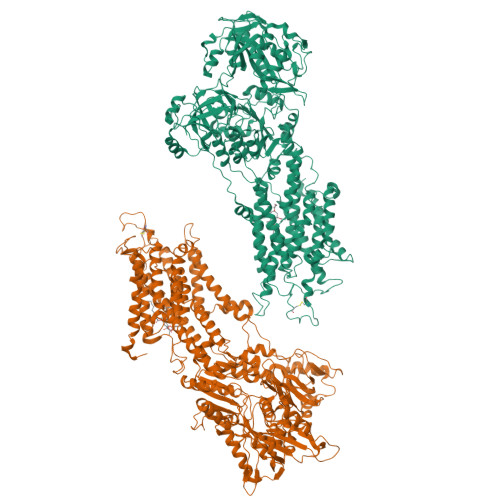
Sarcoplasmic/endoplasmic reticulum calcium ATPase 1 structureClick to view 3D structureSarcoplasmic/endoplasmic reticulum calcium ATPase 1P04191Oryctolagus cuniculusPredicted (SEA)
Prediction Confidence Score
0.223
Applicability Domain
0.393
Statistical Significance
0.0013
Supporting Reference Compounds
15
E-value
10.1204
NAD-dependent protein deacylase sirtuin-5, mitochondrial structureClick to view 3D structureNAD-dependent protein deacylase sirtuin-5, mitochondrialQ9NXA8HumansPredicted (SEA)
Prediction Confidence Score
0.219
Applicability Domain
0.552
Statistical Significance
0.0013
Supporting Reference Compounds
14
E-value
10.3539
Click to view 3D structureSarcoplasmic/endoplasmic reticulum calcium ATPase 2P11507Rattus norvegicusPredicted (SEA)
Prediction Confidence Score
0.212
Applicability Domain
0.212 Low confidence
Statistical Significance
0.0019
Supporting Reference Compounds
1
E-value
15.1806
5-hydroxytryptamine receptor 2C structureClick to view 3D structure5-hydroxytryptamine receptor 2CP28335HumansPredicted (SEA)
Prediction Confidence Score
0.211
Applicability Domain
0.319
Statistical Significance
0.6914
Supporting Reference Compounds
823
E-value
5382.81
Tyrosinase structureClick to view 3D structureTyrosinaseP14679HumansPredicted (SEA)
Prediction Confidence Score
0.211
Applicability Domain
0.5
Statistical Significance
0.0179
Supporting Reference Compounds
29
E-value
139.35
Cytochrome P450 2D6 structureClick to view 3D structureCytochrome P450 2D6P10635HumansPredicted (SEA)
Prediction Confidence Score
0.208
Applicability Domain
0.319
Statistical Significance
0.8845
Supporting Reference Compounds
1130
E-value
6886.15
Induced myeloid leukemia cell differentiation protein Mcl-1 structureClick to view 3D structureInduced myeloid leukemia cell differentiation protein Mcl-1Q07820HumansPredicted (SEA)
Prediction Confidence Score
0.207
Applicability Domain
0.222 Low confidence
Statistical Significance
0.3941
Supporting Reference Compounds
343
E-value
3068.43
Glutathione reductase structureClick to view 3D structureGlutathione reductaseP41921Saccharomyces cerevisiae S288cPredicted (SEA)
Prediction Confidence Score
0.205
Applicability Domain
0.211 Low confidence
Statistical Significance
8.30e-04
Supporting Reference Compounds
2
E-value
6.46149
5-hydroxytryptamine receptor 6 structureClick to view 3D structure5-hydroxytryptamine receptor 6P50406HumansPredicted (SEA)
Prediction Confidence Score
0.205
Applicability Domain
0.319
Statistical Significance
0.6212
Supporting Reference Compounds
536
E-value
4836.38
CDGSH iron-sulfur domain-containing protein 1 structureClick to view 3D structureCDGSH iron-sulfur domain-containing protein 1Q9NZ45HumansPredicted (SEA)
Prediction Confidence Score
0.202
Applicability Domain
0.302
Statistical Significance
0.0128
Supporting Reference Compounds
22
E-value
99.9584
Transthyretin structureClick to view 3D structureTransthyretinP02766HumansPredicted (SEA)
Prediction Confidence Score
0.202
Applicability Domain
0.222 Low confidence
Statistical Significance
0.0934
Supporting Reference Compounds
55
E-value
727.423
Epidermal growth factor receptor structureClick to view 3D structureEpidermal growth factor receptorP00533HumansPredicted (SEA)
Prediction Confidence Score
0.202
Applicability Domain
0.265 Low confidence
Statistical Significance
0.8802
Supporting Reference Compounds
1301
E-value
6852.21
Alpha-2C adrenergic receptor structureClick to view 3D structureAlpha-2C adrenergic receptorP18825HumansPredicted (SEA)
Prediction Confidence Score
0.201
Applicability Domain
0.319
Statistical Significance
0.5817
Supporting Reference Compounds
386
E-value
4528.65
5-hydroxytryptamine receptor 1A structureClick to view 3D structure5-hydroxytryptamine receptor 1AP08908HumansPredicted (SEA)
Prediction Confidence Score
0.201
Applicability Domain
0.313
Statistical Significance
0.7944
Supporting Reference Compounds
953
E-value
6184.42
Click to view 3D structureThioredoxin reductase 2, mitochondrialQ9Z0J5Rattus norvegicusPredicted (SEA)
Prediction Confidence Score
0.2
Applicability Domain
0.2 Low confidence
Statistical Significance
0.0011
Supporting Reference Compounds
1
E-value
8.56341
Concentrations
Not Available
External Links
IdentifiersNot Available
References
Synthesis ReferenceNot Available
MSDSNot Available
General ReferencesNot Available